

What we call "ecommerce customer experience" is really just the sum of all the feelings a shopper has about your brand.
It’s every single touchpoint. The first ad they see, how easy it is to find what they want on your site, the checkout process, and even the support chat they have six months later. It’s not about one perfect moment, but the total impression left by dozens of small, hopefully seamless, interactions.

Years ago, online shopping was purely transactional. A customer needed something, they found it online, they bought it. The game was won or lost on price and product availability. That model just doesn't cut it anymore. Today's shoppers want a connection, and that makes your customer experience ecommerce strategy the new bedrock of your brand.
A great experience has become the ultimate tiebreaker, often more important than the product itself.
Think about it. If two stores sell the exact same sneakers at the same price, which one gets your money? You'll always pick the one with the faster website, the better product photos, the clearer shipping info, and the no-hassle returns. You choose the better experience, every time.
It’s tempting to silo customer experience into boxes like "site design" or "customer service." But shoppers don't see it that way. To them, it's one continuous conversation with your brand. Every single touchpoint either adds to or subtracts from their perception of you.
A clunky mobile site, confusing navigation, or a search bar that returns irrelevant results, these all create friction. These little frustrations stack up, and modern buyers have zero patience for them. In fact, research shows that nearly 80% of online shoppers will ditch their cart over a bad experience and head straight to a competitor who gets it right.
The reality is that we are living in the age of the customer. Businesses wishing to survive long term must move past the idea of customer retention, they need to focus on customer obsession.
This obsession means scrutinizing every interaction, no matter how small, and asking, "Does this help or hurt?" It’s about building trust at every step. This journey-centric view is key to a consistent brand feel. For a deeper dive on building that consistency, you can learn more about omnichannel vs multichannel strategies in our guide.
Investing in a superior customer experience ecommerce plan isn't a "nice-to-have"; it's a direct investment in your bottom line. Happy customers don't just buy once. They come back again and again, spend more over time, and become your best marketing channel.
Here’s why it hits the balance sheet:
At the end of the day, a great experience is about removing friction, building trust, and creating a genuine connection. This is how you turn one-time buyers into loyal fans, and build a competitive advantage that’s almost impossible for anyone else to copy. Your brand is no longer just what you sell; it's how you make your customers feel.

A fantastic customer experience in ecommerce isn't about some single, magical "wow" moment. It’s the sum of many small, well-executed parts working in harmony. Think of them as the foundation supporting your entire online store.
When these pieces are solid, the customer journey feels effortless and intuitive. But if any one of them is weak, the whole structure can feel shaky, sending frustrated shoppers running to your competitors. Let's dig into the five core components you have to get right.
Your website is your digital front door, and you only get one chance to make a first impression. A slow, confusing, or cluttered site is the online version of a brick-and-mortar store with messy aisles and burned-out lights. People will just walk out.
Clean, intuitive navigation isn't a "nice-to-have", it's a requirement. This means logical categories, a frictionless path to checkout, and pages that load almost instantly. Every extra second you make a customer wait is an open invitation for them to get distracted and leave.
And let’s be clear: in 2026, mobile design is everything. Most shoppers discover, research, and buy on their phones. The stakes are high, with 80% of consumers saying the quality of the experience is just as important as the product itself. Still, many brands botch their mobile site, directly hurting sales and satisfaction.
Don't underestimate the power of your search bar. It's one of the most valuable tools on your site. A customer using search is telling you exactly what they want to buy; your only job is to help them find it without a fight.
Your search bar should act like a knowledgeable store associate. A bad search that returns irrelevant junk is like asking an employee for help and getting pointed to the wrong side of the store. It’s frustrating and a fast track to a lost sale.
A truly smart search function should:
When a customer uses your search bar, they are handing you a direct signal of their intent to buy. A search experience that delivers exactly what they’re looking for, instantly, is one of the fastest ways to build confidence and drive a conversion.
Once a shopper lands on a product page, the details you provide are all they have to go on. This is your moment to build trust and set clear expectations. Vague, incorrect, or missing product information is a one-way ticket to abandoned carts and, even worse, costly returns.
This is about more than just a quick description. We're talking about rich product content: high-res images from every angle, videos showing the item in action, detailed specs, size guides, and material breakdowns. This is how you answer questions before a customer even thinks to ask them.
Keeping this information consistent is critical. When all your product data is centralized, you can ensure every channel, from your website to third-party marketplaces, is always accurate. In fact, that's exactly the problem that a product information management system is designed to solve.
The customer experience doesn't stop after the purchase. The post-purchase phase is where you either cement a great relationship or create a ton of anxiety. Nothing causes friction like being in the dark about an order's status.
From the second an order is placed, proactive communication is your best friend. Customers expect an immediate order confirmation, a shipping notification, and a tracking number they can follow. Getting ahead of these updates stops the flood of "Where is my order?" emails and shows you have your act together.
Even with a perfect website, things go wrong. A package gets lost, a product arrives damaged, or a customer just has a simple question. The way you handle these moments is what truly defines your brand.
Support shouldn't be a maze. Customers need it to be easy to find and quick to respond. A quality ecommerce live chat solution, for example, can offer instant assistance when shoppers need it most. Offering a mix of chat, email, and phone support lets customers connect how they want, turning a potential disaster into a positive interaction that builds real, lasting loyalty.
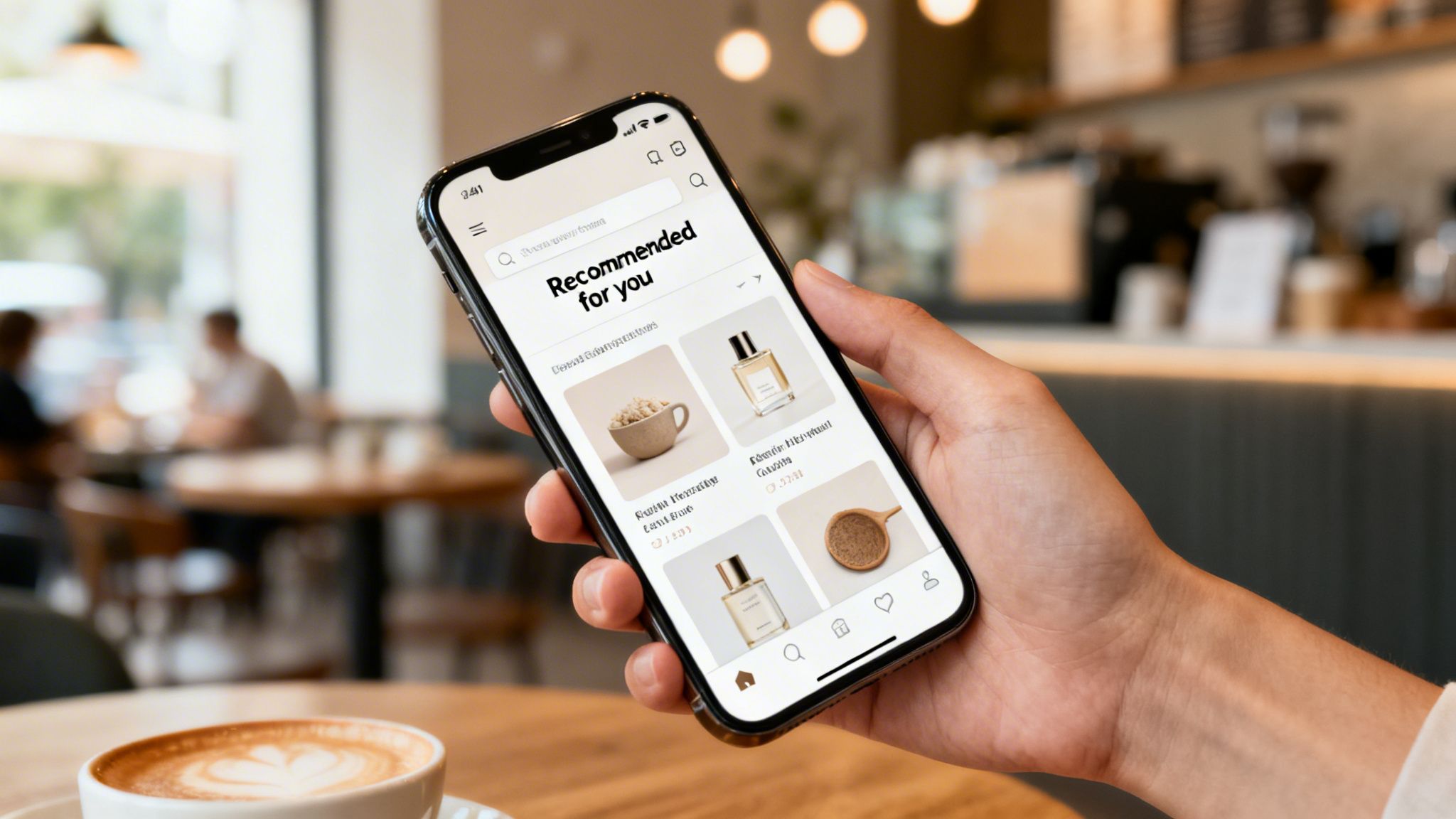
Think of personalization as the difference between a shopkeeper who greets every customer with the exact same script and one who remembers your name and asks if you need a refill of your usual. One is noise; the other is a conversation.
Real personalization is so much more than just plugging a {first_name} tag into an email. It’s about using what you know about a customer to anticipate what they’ll need next, transforming the entire customer experience ecommerce journey from a one-off transaction into a helpful, guided relationship.
By looking at a shopper’s past purchases and browsing history, you can serve up product suggestions and deals that feel genuinely useful. It’s how you make every single person feel like the store was built just for them.
There’s a huge disconnect in ecommerce right now, and it’s often called the "personalization gap." It's the chasm between what shoppers expect from a brand and the generic experience they actually get. This isn't a problem, it's a massive opportunity for anyone willing to step up.
The demand for tailored shopping is undeniable. Data from sources like Apizee shows that 71% of consumers now expect personalization, but only 48% feel brands are actually delivering. For businesses that get this right, the payoff is huge. Companies see an average 38% increase in spending from customers who receive a personalized experience.
Closing this gap means using data to do more than just react. It’s about proactively guiding shoppers toward products they’ll genuinely love, creating a far more engaging and memorable experience.
The entire engine of smart personalization runs on one fuel: high-quality data. Every click, search, and purchase a customer makes is a breadcrumb, a clue to their preferences and intent. The magic happens when you connect these dots.
Great personalization is fueled by:
Personalization is about making the customer feel seen and understood. When you can anticipate a need or recommend a product that genuinely solves a problem, you move beyond being just a store and become a trusted advisor.
Of course, all of this hinges on having clean, organized data. Without it, your personalization engine will sputter and fail. If you need to get your data house in order, our article on managing data quality is a great place to start.
So, what does this actually look like? It can be subtle, but it always feels helpful. Imagine a homepage that looks different for every single visitor, shifting its banners and featured collections based on their unique journey.
For example, a customer who previously bought hiking boots might land on your homepage and see a big banner for new outdoor gear. At the same time, another customer who was just browsing women's dresses sees a curated collection of new arrivals in that category. It’s the same website, but it's a completely different and far more relevant experience for each person.
This is how you build a superior customer experience ecommerce strategy that doesn't just drive sales. It builds real, lasting loyalty.
Chasing a great customer experience isn't just a feel-good goal. It's a hardcore financial strategy. Get it right, and you build a loyal base of customers who bring in predictable revenue. Get it wrong, and the damage is way more than a few angry emails, it’s a direct hit to your bottom line. And it hits hard.
Every single frustrating moment a shopper has with your brand chips away at their trust. A broken link, an item that’s out of stock but showing as available, a search result that makes zero sense. These aren't just minor bugs. Think of them as holes in the hull of your ship, slowly taking on water and sinking your profits.
It's easy to get tunnel vision on attracting new shoppers. After all, new business feels like growth. But the real money in ecommerce isn’t just in getting customers; it's in keeping them. And losing a customer is far more expensive than most businesses ever calculate.
Think about what you spend on marketing. The ads, the social media pushes, the content you create, it all adds up. When a shopper bounces because of a bad experience, you haven't just lost their future business. You've completely torched the money it took to get them through the door in the first place.
A poor customer experience doesn't just cost you a single sale. It costs you a lifetime of potential revenue and turns someone who could have been an advocate into a critic. That's a financial hit coming from two directions at once.
The math here is impossible to ignore. The economics have shifted entirely toward retention. Research shows that just a 5% increase in customer retention can boost profits by a staggering 25% to 95%. That massive range shows just how valuable every single retained customer becomes over their lifetime.
Compare that to what it costs to get a new customer, anywhere from 5 to 25 times more than keeping one you already have. You can see more on this massive shift in these ecommerce customer retention statistics.
Today’s shoppers don't just visit your website. They might see your ad on Instagram, browse on their laptop, check a price on your mobile app, and then maybe even visit a physical store. A seamless, consistent experience across all of these touchpoints is the absolute bedrock of customer loyalty.
The second that consistency breaks, trust evaporates. Instantly. Here’s how it usually plays out:
Each one of these moments of friction sends a clear message: you don't have your act together. For most customers, that's more than enough reason to take their money to a competitor who offers a smoother, more trustworthy experience. Every piece of wrong product data and every broken promise weakens loyalty and pushes customers away, directly gutting your sales.
Great ideas for improving your customer experience are one thing. Actually executing them at scale is another challenge entirely. So how do you deliver a smooth, consistent, and personalized experience to thousands of customers at once?
It all comes down to your technology stack.
You wouldn't build a house with just a hammer and saw; you need a full toolkit. The same goes for ecommerce. To build a modern, satisfying shopping experience, you need a smart tech stack working behind the scenes. This isn't about having the most tools. It's about having the right tools that talk to each other, creating a seamless flow of information that ultimately makes the customer’s life easier.
The heart of any modern ecommerce operation is a Product Information Management (PIM) system. Think of a PIM as the single source of truth for everything related to your products, the master library for technical specs, pricing, marketing copy, and high-resolution images.
Without a PIM, that information lives in a chaotic mess of spreadsheets, shared drives, and random folders on different peoples' computers. This chaos is the root cause of so many bad customer experiences.
A PIM system centralizes your product data, ensuring that everyone, from marketing and sales to customer support and the warehouse team, is working from the same accurate, up-to-date information. It’s the foundation for consistency.
When your data is organized in one place, you kill the frustrating inconsistencies that kill customer trust. No more showing one price on your website and another on a marketplace. A PIM makes sure every channel gets the same correct information, every single time.
Once your product data is clean and centralized in a PIM, the next move is to make that data actually work for you. This is where AI-powered tools come in. They don’t just store your information; they actively improve it, making it more engaging for shoppers and more visible to search engines.
AI can take a boring list of product specs and spin it into compelling, benefit-focused descriptions designed for different channels. The description for your own website might be detailed and tell a story, while the version for Amazon could be punchier and packed with specific keywords.
Here’s a look at what an AI-powered PIM like NanoPIM looks like in action.
The interface brings product information, digital assets, and AI enrichment tools together into one dashboard. This is how you stop just storing data and start actively optimizing it for a better customer experience in ecommerce.
Let's be real: manual content creation is slow, expensive, and full of mistakes. AI takes on the heavy lifting, freeing up your team to think about bigger strategic goals.
A few key wins from AI-driven enrichment:
This one-two punch, a PIM for your data foundation and AI as your enrichment engine, is what builds a powerful tech stack. The PIM delivers accuracy and consistency, while the AI provides the scale and optimization you need to win. It’s how you make sure your product story is not only correct but also compelling, no matter where a customer finds you.
Diving into improving your store's customer experience can feel like a huge undertaking. It’s a big topic, and it's easy to wonder where you should even start. Let's cut through the noise and tackle the most common questions managers have when they begin this journey.
If you have to pick just one thing, start with your customer reviews. Forget fancy marketing for a second. Before a shopper trusts anything you say, they'll look for what other people have said. It’s that simple.
This is all about social proof. When someone sees that others had a great experience and got what they paid for, it melts away their hesitation. The data is clear: up to 98% of consumers read online reviews before making a purchase, and most sales go to products with a 4- or 5-star rating.
But it's not just about building trust. Good reviews are a gift that keeps on giving. They also:
Thinking of customer experience as a "nice-to-have" is a classic mistake. It's a direct driver of revenue, and the connection is crystal clear. A great CX makes you more money in a few key ways.
First, it creates customer loyalty. This is the secret to sustainable growth. Happy customers don't just buy from you once; they come back. They choose you over a competitor, even if it costs a little more. This is what drives up your Customer Lifetime Value (CLV).
Second, smart personalization and genuinely helpful product suggestions will increase your average order value (AOV). When you show people products that are actually relevant to them, they naturally buy more. It's not about being pushy; it's about being helpful.
Finally, every bit of trust you build, through clear product info, social proof, and good communication, directly boosts your site's conversion rate. You turn more of your existing traffic into paying customers, which is a straight shot to higher sales.
Yes, you absolutely can. The trick is to be helpful, not intrusive. Customers are surprisingly open to texts from brands, but only when those messages provide real value and save them time.
Put yourself in their shoes. An instant text letting you know your package has shipped is genuinely useful. A link to track your order right on your phone is far more convenient than hunting through your email inbox. As long as you stick to high-value, time-sensitive information and make it dead simple to opt out, SMS can become one of your most valuable and appreciated channels.
For instance, people often wonder what Customer Experience Management (CXM) really means for their daily operations. At its heart, it's about orchestrating every customer interaction to meet or beat their expectations. Using SMS for helpful, timely shipping updates is a perfect, real-world example of great CXM.
The single biggest mistake is making the program purely transactional. A simple "spend money, get points" system rarely builds an actual emotional connection to your brand. Customers in these programs are loyal to the discount, not to you.
The best programs make people feel like they're part of an exclusive club. They build a community. Instead of just rewarding purchases, they reward other valuable actions, like leaving a review, sharing on social media, or referring a friend. Adding VIP tiers is another powerful tool, it gives your best customers a sense of status and recognition they can't get anywhere else.
The diagram below shows how a modern tech stack pulls all the necessary data together to create these kinds of personalized, rewarding experiences.
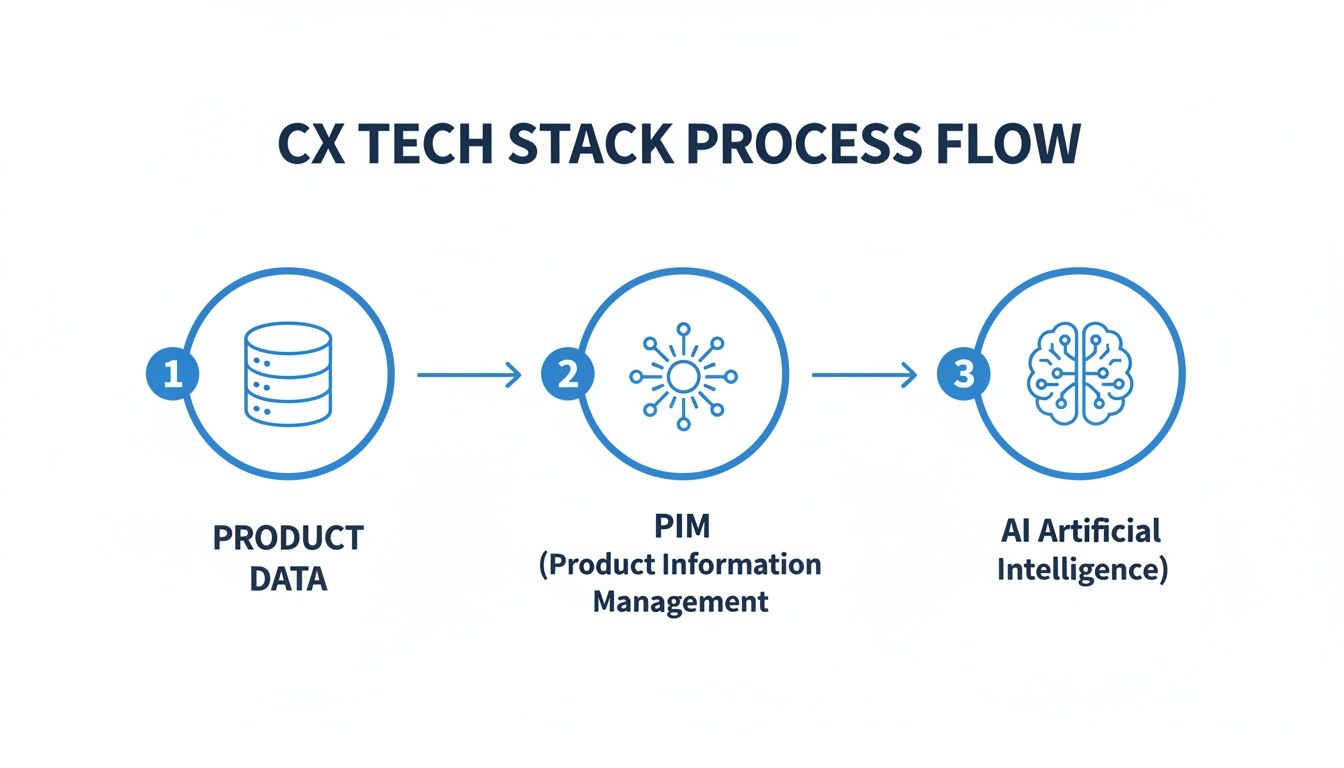
This process shows how clean, foundational product data gets centralized in a PIM and then enriched with AI to power the superior customer experiences that set brands apart.


