

If you want to get your products into retail stores, your wholesale line sheet is going to be your single most powerful tool. It’s a straightforward, no-fluff document that gives a busy retail buyer all the critical product info they need to place an order, photos, prices, SKUs, and nothing more.
Think of it as your secret weapon for closing deals. It’s quick, clear, and gets straight to the point.
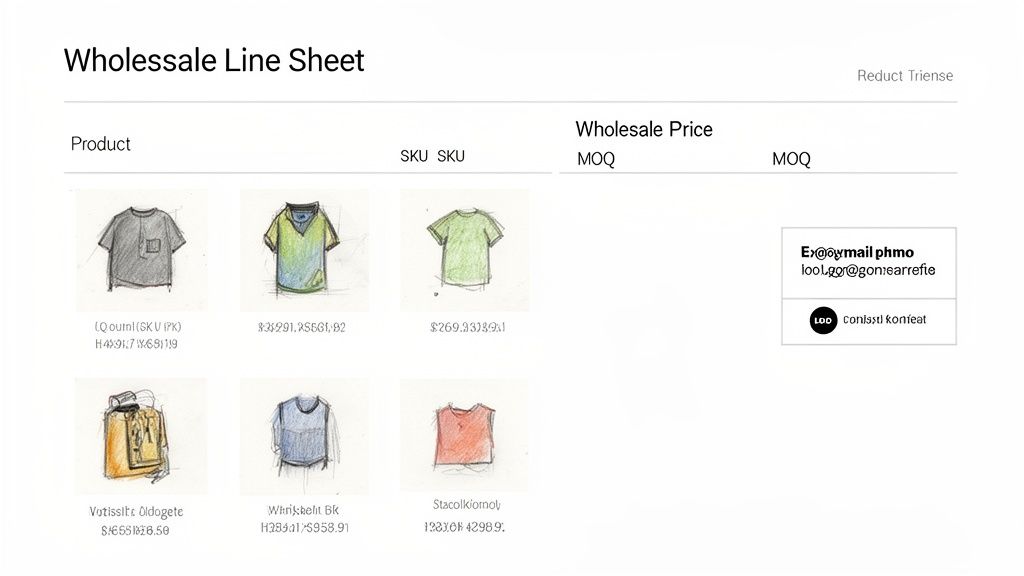
If you're serious about wholesale, a line sheet isn't just a nice-to-have; it's a non-negotiable. It’s the bridge between your brand and a potential retail partner. Its entire purpose is to make a buyer's life easier by laying out all the ordering information in one clean, easy-to-scan format.
Put yourself in their shoes. A busy store owner gets dozens of emails a day from new brands. They don’t have time to flip through a glossy, story-driven catalog just to find a price. They need the facts, and they need them now. This is where line sheets for wholesale are clutch. They cut through the noise.
It’s easy to mix up a line sheet with a catalog or a lookbook, but they have very different jobs. Nailing the distinction is key to using each one effectively. A catalog sells a story; a line sheet makes a sale.
A lookbook inspires the buyer, but the line sheet is what actually closes the deal. One builds an emotional connection, while the other gives them the practical details they need to pull the trigger.
Here’s a quick rundown of their roles:
For anyone just starting a fashion business, getting a handle on these tools from day one is essential. A gorgeous lookbook might get your foot in the door, but a well-organized line sheet is what gets your product on their shelves.
At the end of the day, a clean, scannable line sheet closes deals faster than a big catalog because it respects the buyer's time. It gives them exactly what they need to decide without burying them in marketing fluff.
A buyer can glance at your products, see the wholesale and suggested retail prices, and quickly do the math on their potential profit margin. This direct approach shows you’re a professional who understands how their business works. You’re not just another creative brand; you’re a partner who’s easy to work with. In the crowded retail space, that simple difference can change everything.
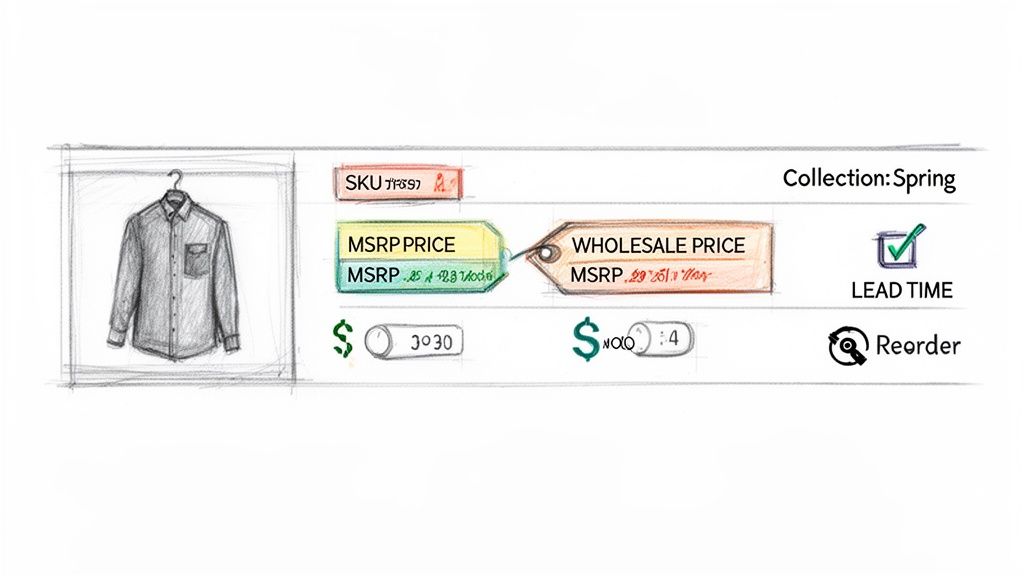
Here's the honest truth: a great line sheet makes a retail buyer’s job easy and gets you a quick PO. A bad one? It gets deleted without a second thought.
The difference isn't fancy graphics; it's clarity. You have to anticipate every single question a buyer has and answer it before they even think to ask. When you nail this, you’re not just showing products. You’re building trust and making it incredibly simple for them to say "yes."
At its core, a line sheet is a data document. Yes, it needs to look good, but the information is what actually drives the sale. Every product you list needs to have the same core set of details. No exceptions.
This is the absolute bare minimum for every product:
Think about it: a busy buyer should never have to email you for a SKU or a price. If they have to hunt for basic info, they’ll just move on to the next brand in their inbox. Make their job easy, and they'll reward you with an order.
Beyond the product specs, your line sheet needs to include key information about your business. This is where you set expectations and lay the groundwork for a professional partnership. A solid line sheet functions much like a detailed product data sheet, acting as a single source of truth.
Make sure your company details are impossible to miss. Stick them on the cover and in the footer of every page.
It might seem basic, but I can't tell you how many brands I've seen forget this. Don't make a potential partner dig through their inbox to figure out how to contact you.
This is where you spell out how you do business. Stating your terms clearly upfront avoids headaches and misunderstandings down the road. This section is just as critical as your product photos.
Be sure to include these policies:
From my own experience, I've seen that grouping products by collection or theme can seriously increase order sizes. When a buyer can see how a whole collection works together, they're more likely to buy the whole story, not just a few cherry-picked items. It’s a simple trick that turns a product list into a curated assortment.
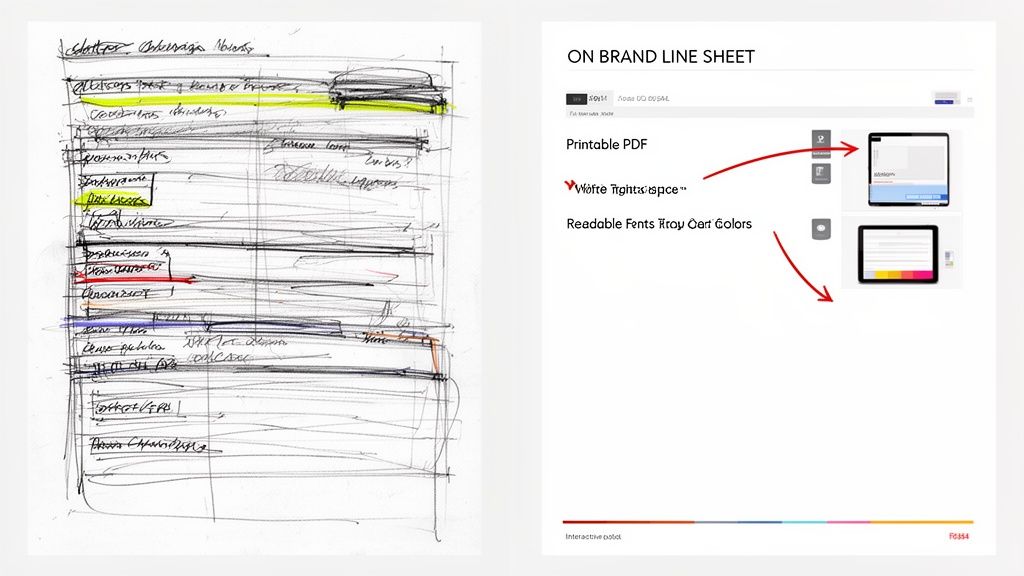
Let’s be real for a second. A cluttered, confusing document is an instant turn-off for a busy retail buyer. Your line sheet’s design isn’t just about looking pretty; it’s about function. A great design guides their eye, makes information a breeze to find, and helps them make a purchase decision without any friction.
The whole point is to create a professional, clean, and on-brand experience that feels completely effortless. When a buyer opens your line sheet, you want their first thought to be, "Okay, this brand has its act together."
One of the first calls you'll have to make is the format. The two main players are the trusty printable PDF and the slicker, more modern interactive digital version. Honestly, there's a time and place for both.
A printable PDF is the industry standard for a reason. It’s a static document you can pop into an email or print out for a trade show. It’s reliable, everyone can open it, and you have total control over how it looks.
On the other hand, an interactive digital line sheet is often a link to a private webpage or a clickable PDF. These can have cool features like direct links to product pages, embedded videos, or even a built-in ordering system where buyers can add items directly to a cart.
A well-designed line sheet is a silent salesperson. It communicates professionalism and efficiency, making the ordering process so smooth that a buyer barely has to think. This is how you stand out in a crowded inbox.
So, when do you use which? It's pretty situational.
For most brands, a professionally designed PDF is the non-negotiable starting point. You can always level up to a digital platform as your wholesale business grows.
A buyer's time is their most valuable asset. Your line sheet design has to respect that by being incredibly easy to scan. This is where you get strategic with layout, fonts, and white space.
Think in terms of visual hierarchy. The most important stuff, like product names and prices, should jump off the page. Use a slightly larger or bolder font for these key details. Everything else can take a backseat.
Here are a few practical tips to put this into action:
Remember, your product photography is the star of the show. If your images are blurry or poorly lit, even the best design can't save your line sheet. To make sure your visuals are up to snuff, check out our guide on how to take good product pictures.
Ultimately, strong design is about reducing friction. In a fast-moving industry like fashion, where a brand might drop 6-8 collections per year, an effective line sheet can slash the back-and-forth emails by up to 60%. That kind of efficiency can save a sales team an average of 15 hours a week. This is time they can spend finding new accounts instead of chasing down order details.
Your line sheet is polished and ready to go. Now what? A perfect document doesn't do you any good just sitting on your hard drive. The real work begins when you get it into the right hands and, more importantly, follow up in a way that turns a curious buyer into a paying partner.
This isn't about some complicated sales funnel. It's about developing a simple, repeatable workflow for finding the right stores, reaching out with confidence, and gently nudging them toward a decision without ever feeling pushy. Let's break down how to turn that beautifully designed line sheet into actual purchase orders.
First things first: you need a list of dream stores. Don't make the mistake of blasting your line sheet to every retailer you can find. A targeted approach always wins because it proves you've done your homework. Think about your ideal customer. Where do they shop? What's their vibe?
Look for shops that genuinely align with your brand's style and price point. If you’re selling high-end, handmade leather goods, pitching a fast-fashion accessory boutique is a waste of everyone's time.
Here's how I build a target list from scratch:
I always recommend starting with a list of 25-50 stores. It's a manageable number that lets you personalize each email, which dramatically boosts your chances of getting a real response.
With your list in hand, it's time to make contact. Email is still the most effective way to introduce your brand, but you have to do it right. Buyers are incredibly busy people, so your message needs to be personal, professional, and straight to the point.
Your email needs to accomplish three things in just a few seconds: introduce your brand, explain why you're a good fit for their store specifically, and make it dead simple for them to see your products.
Here’s a simple, effective template I've seen work time and time again:
Subject: A Brand You'll Love: [Your Brand Name] x [Store Name]
Hi [Buyer's Name],
I’m a huge fan of [Store Name] and really admire how you curate [mention something specific, like "unique, handmade jewelry" or "your collection of sustainable home goods"]. I believe my line of [your product type], [Your Brand Name], would be a perfect addition for your customers.
I've attached our latest line sheet with our full collection and wholesale terms for you to review.
Thanks for your time, and I hope to hear from you soon!
Best,
[Your Name]
To give your emails the best shot at landing, it's a good idea to use an email deliverability and spam checker before you hit send. This helps ensure your carefully crafted message actually makes it to the buyer's inbox. An email that goes to spam is a lost opportunity.
Here’s a truth every brand owner learns: most orders don't come from the first email. Buyers are juggling a hundred different things, and your message can easily get buried. The follow-up is where the magic really happens.
But there’s a fine line between persistent and pushy. A good rule of thumb is to wait about a week after your initial outreach. If you haven't heard back, a friendly, low-pressure nudge is all you need.
Your follow-up sequence can be this simple:
After three attempts, it’s generally best to move on. This approach respects their time while keeping your brand on their radar. It's a simple, repeatable process that reliably turns that initial interest into confirmed wholesale orders.
If your brand is growing, you know the headache. That manual process of creating and updating line sheets for wholesale goes from a quick task to a full-blown nightmare. Suddenly you’re drowning in spreadsheets, hunting for the latest product shots, and triple-checking pricing, all while praying you didn't just send a major buyer an outdated version.
It’s a massive time sink and, frankly, a recipe for embarrassing and costly mistakes.
This is exactly where automation becomes your new best friend. By setting up a central system to manage all your product information, you can get out of the manual weeds and start generating perfect line sheets in minutes. It’s a shift that frees up your team to do what they’re actually supposed to be doing: building relationships and selling.
The whole idea behind automating line sheets is beautifully simple: have one central, undisputed place for all your product data. This is precisely what a Product Information Management (PIM) system is designed to do. Think of it as a secure digital library for everything that makes your products, your products.
Instead of data being scattered across random folders, endless spreadsheets, and different team members' laptops, a PIM organizes it all.
When all this information is in one place, creating a line sheet stops being a copy-and-paste marathon. It becomes a simple export. You can generate custom, error-free line sheets for wholesale tailored to specific retailers or seasons with just a few clicks.
Let's play this out. Imagine a major retail buyer needs a line sheet for your new fall collection, but they have very specific data requirements.
With a PIM, the process is almost laughably efficient. You just filter for your "Fall Collection" category, select the exact data fields the buyer needs, and pick your branded line sheet template.
The system does the rest, pulling the approved photos, the correct wholesale pricing, and the most up-to-date descriptions automatically. Human error is literally taken out of the equation.
This simplified sales process is what automation truly enables. It gives your team total confidence in the materials they're using to target, share, and close deals.
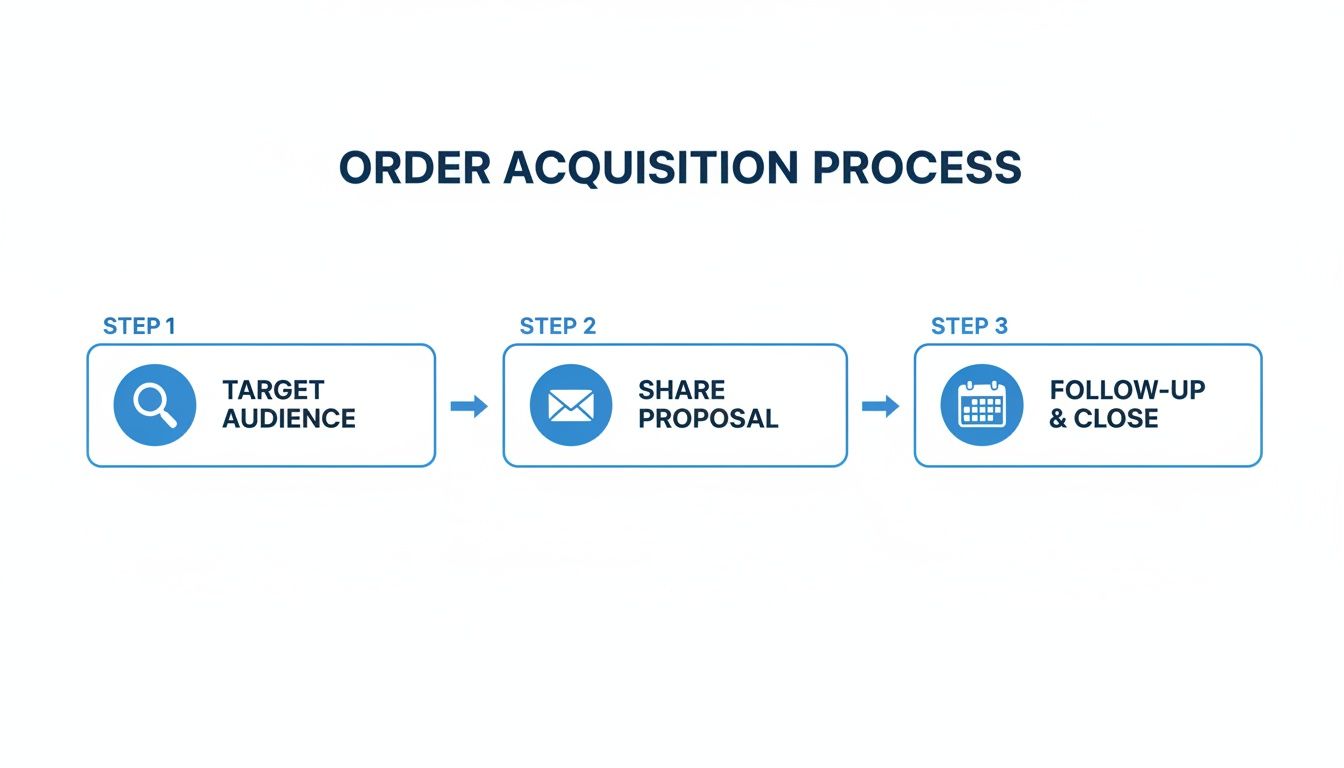
When you automate the creation of your sales materials, each step here gets faster and far more reliable. That means more time can be spent on the actual human element of selling.
In a global wholesale market now valued at over $15 trillion annually, tools like NanoPIM are a complete game-changer. They centralize product data to generate AI-optimized line sheets, allowing you to create channel-specific versions for different buyers. Automated checks guarantee you won’t have missing fields like sizes or lead times, an issue that plagues nearly 30% of traditional sheets. This is how you turn raw specs into polished PDFs that can boost conversion rates by 35%, all while maintaining an audit trail for total peace of mind.
As your brand expands, keeping everything consistent is a monumental task. A PIM system like NanoPIM enforces that consistency for you. By using templates, every single line sheet that goes out the door has your logo, your brand colors, and your approved formatting.
You’re no longer just saving time; you’re protecting your brand identity. Every document a buyer receives looks professional and cohesive, building trust from the very first interaction.
This level of consistency is absolutely vital for scaling your wholesale strategy. A PIM gives you a solid framework to support your growth, ensuring that whether you have 50 products or 5,000, your process for creating sales materials stays just as simple and reliable.
If you're looking to dive deeper into the fundamentals, our guide to product information management solutions is the perfect place to start. This is how modern brands leave the manual chaos behind and build a wholesale program that’s truly built to last.
Even the most buttoned-up brands have questions when it comes to creating and distributing line sheets for wholesale. You're not alone. Let’s tackle some of the most common sticking points we see every day.
Think of this as your go-to cheat sheet for sharpening your sales tools and closing deals with confidence.
This is probably the question we hear most, but it’s simple once you realize they have two totally different jobs. A line sheet is for selling, and a lookbook is for storytelling.
A line sheet is a pure sales tool. Its entire purpose is to make it dead simple for a retail buyer to place an order. It’s a functional document, usually a clean grid, packed with the nitty-gritty details: SKUs, wholesale pricing, color options, and order minimums. No fluff, just facts.
A lookbook, on the other hand, sells the dream. It’s a marketing piece that uses gorgeous, editorial-style photography to build an emotional connection and show off your brand’s aesthetic. It’s designed to inspire a buyer and help them envision your products in their store. In fact, many lookbooks don’t even show prices.
The best brands use both. The lookbook gets the buyer hooked on the vision, and the line sheet provides the practical info they need to write the purchase order.
Clarity is everything when it comes to pricing. The most important number on the page is your Wholesale Price, the cost per unit for the retailer. A solid industry standard, known as "keystone pricing," is to set your wholesale price at 50% of your Manufacturer's Suggested Retail Price (MSRP).
You should always list both the Wholesale Price and the MSRP. This isn’t just extra info; it does a few critical things for you:
Just do your homework first. Make sure your wholesale price gives you enough room to cover all your costs (production, overhead, marketing) and still leaves a healthy profit margin for your own business. A business that isn't profitable isn't a business for long.
Treat your line sheet like a living document. It needs to be updated the moment any product information changes. Sending out old information isn’t just unprofessional; it can lead to huge ordering headaches and sour a relationship with a good retail partner.
At a minimum, you'll create a new version for every new collection or season. But you need to make immediate updates if:
Nothing frustrates a buyer more than trying to order an item you can no longer deliver. This is where a Product Information Management (PIM) system becomes a game-changer. It automates these updates, ensuring your line sheets for wholesale are always 100% accurate without you having to manually track every single change.
Ready to stop wasting time with manual updates and say goodbye to costly data errors? NanoPIM centralizes all your product information, allowing you to generate perfect, on-brand line sheets in minutes. See how you can scale your wholesale business with confidence at https://nanopim.com.


