The 12 Best Digital Asset Management Software Picks for 2026

Damien Knox
|
February 24, 2026
The 12 Best Digital Asset Management Software Picks for 2026

Finding the best digital asset management software can feel overwhelming, especially when your team is drowning in a sea of disorganized photos, videos, and documents. As your product catalogs grow and you expand across multiple channels like Amazon, your website, and social media, a simple shared drive just doesn't work anymore. Files get lost, outdated versions are used, and maintaining brand consistency becomes a constant battle. This is precisely the problem a good DAM system solves. It acts as a single, centralized library for all your valuable brand and product assets.

This resource guide is built to cut through the noise and marketing jargon. We provide a direct comparison of the top DAM platforms available today, from well-known options like Adobe Experience Manager Assets and Bynder to powerful alternatives like NanoPIM and Cloudinary. We’ll get straight into the details that matter for your decision-making process.

Each review includes:

  • A concise overview of the platform's core strengths.
  • Honest pros and cons based on real-world use.
  • Pricing guidance to help you budget effectively.
  • Ideal use cases for different business types, including retail, e-commerce, and manufacturing.
  • Direct links and screenshots so you can see the software in action.

Our goal is simple: to give you a clear, practical roadmap for selecting the right digital asset management software. This will help you centralize your content, automate workflows, and empower your team to find what they need, when they need it. Let's dive into the options.

1. NanoPIM

NanoPIM earns its top spot by merging Product Information Management (PIM) and Digital Asset Management (DAM) into a single, AI-driven platform. It is a powerful choice for businesses that need to create and manage product content at scale, particularly for the demands of modern search engines and online marketplaces. The platform centralizes product specs, variants, and media, creating a single source of truth that feeds consistent, high-quality information across all your sales channels.

What truly sets NanoPIM apart is its AI-first approach designed for Generative Engine Optimization (GEO). It uses multiple Large Language Models (LLMs) and prebuilt prompt templates to automatically generate and score channel-specific copy for Amazon, Google, and eBay. This means your teams can stop duplicating effort and start creating optimized listings faster, all while maintaining brand consistency.

Key Features and Strengths

NanoPIM combines robust data governance with an intuitive user interface, making it one of the best digital asset management software options for teams that need both control and speed.

  • Smart Prototypes & Data Governance: Create consistent data models using cascading attributes. A unique Data Holding Bay allows you to import, compare, and merge updates from suppliers or other systems safely, preventing errors before they go live.
  • AI-Powered Asset Management: The system automatically tags media with relevant metadata using AI, making assets easy to find. It also includes tools for AI-enhanced image transformations, ensuring your visuals meet the specs for every channel.
  • Human-in-the-Loop Workflow: Every change, whether AI-generated or manually edited, goes through a review process with clear versioning and audit trails. This provides the control needed for enterprise-level confidence.

“NanoPIM is built by product managers for product managers. We needed to deliver enterprise-grade controls with startup simplicity, and that’s exactly what we built.”
- Sophia Smith, CEO, AYZ Tech

Pricing and Implementation

NanoPIM offers a transparent, usage-based pricing model that scales with your activity. Costs are tied to a token system (starting at $10 per 1,000 tokens) that covers storage, data syncs, and AI actions. This pay-for-what-you-use approach is ideal for businesses with seasonal sales cycles. The platform also offers traditional monthly tiers, like a Starter plan around $49/mo and an Agency plan around $159/mo, for more predictable billing.

While powerful, new users should run a pilot project to forecast their typical token consumption accurately. For an in-depth look at the principles behind this structure, you can learn more about product information management on their blog.

Pros:

  • AI-first optimization generates channel-specific copy quickly.
  • Strong data governance tools minimize errors and ensure consistency.
  • Transparent, usage-based pricing aligns cost with actual activity.
  • Integrates with major e-commerce platforms and ERPs for fast setup.

Cons:

  • Token-based pricing can be difficult to forecast without a pilot.
  • Advanced features like custom prototypes require some initial setup to use effectively.

Website: https://nanopim.com

2. Adobe Experience Manager (AEM) Assets

Adobe Experience Manager (AEM) Assets is a cloud-native, enterprise-grade DAM designed for large organizations deeply invested in the Adobe ecosystem. It serves as a central hub for managing, governing, and delivering creative assets across all marketing and commerce channels. Its primary strength lies in its seamless connection with Adobe Creative Cloud and Experience Cloud products, creating a unified workflow from asset creation in Photoshop or Illustrator to campaign delivery through Adobe Target or Marketo Engage.
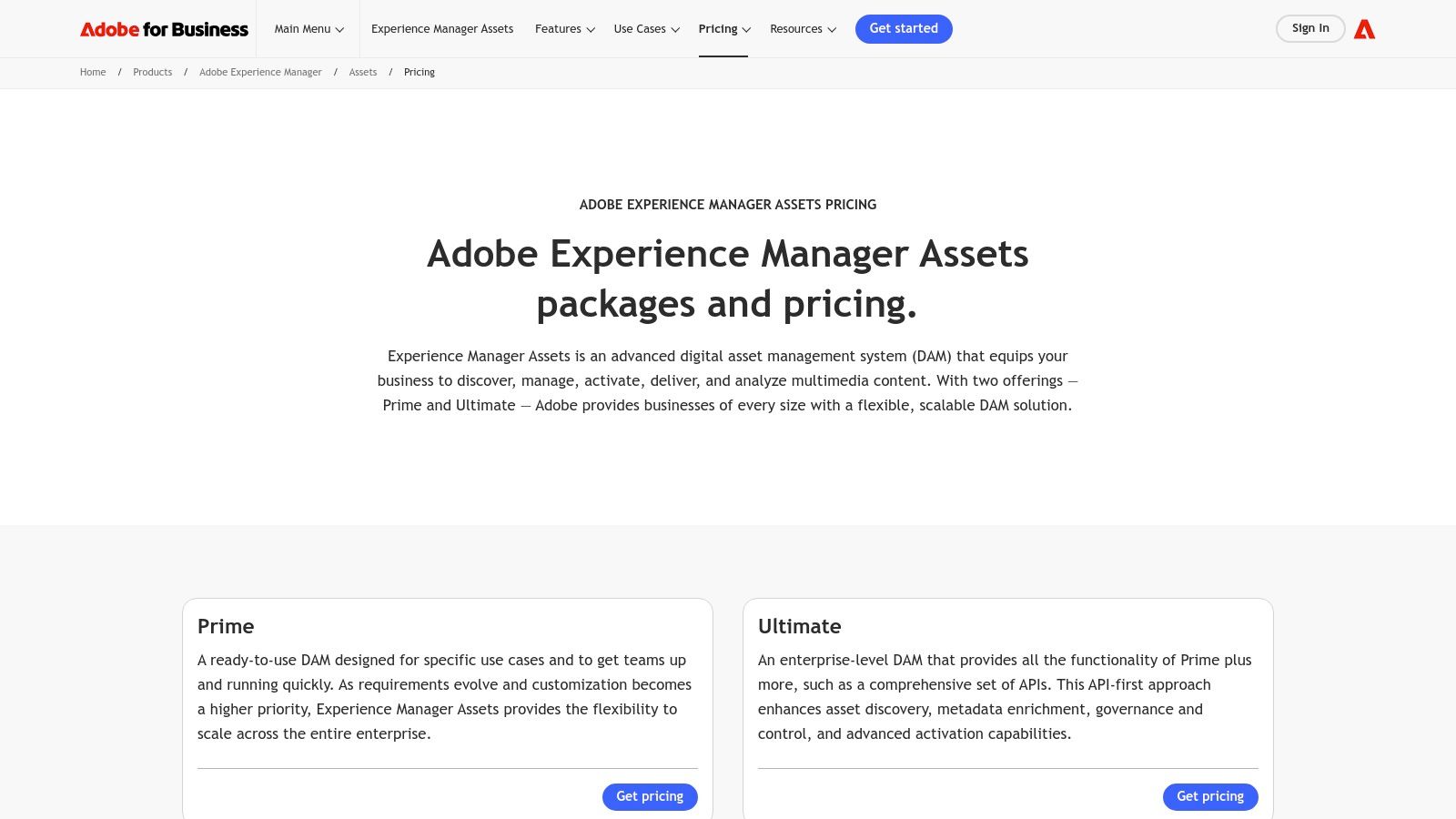
Adobe Experience Manager (AEM) Assets

This platform excels at automating tasks that bog down creative and marketing teams. AEM’s AI, Adobe Sensei, automatically applies smart tags, crops images for different channels, and even generates alt-text, which helps with both accessibility and SEO. These features are part of why it's a top contender for the best digital asset management software. You can discover more about the impact of AI on DAM platforms and how it's changing content workflows by exploring digital asset management AI.

Key Details & Analysis

  • Ideal Use Case: Large enterprises and global brands that already use Adobe Creative Cloud and Experience Cloud for their core marketing operations. It's built for complex governance and high-volume asset delivery.
  • Pricing: Custom quote-based. Pricing is at the enterprise level and can be a significant investment, often making it inaccessible for small or mid-market companies.
  • Implementation: The setup process is complex and often requires specialized developers or Adobe-certified partners. The total cost of ownership, including implementation and maintenance, should be carefully considered.
  • Powerful enterprise-level governance and security controls.
  • Deep, native integrations with the Adobe suite create a very efficient workflow.
  • Strong developer tools and APIs allow for extensive customization.
  • High cost and complexity put it out of reach for many businesses.
  • Requires a significant investment in training and technical resources to manage effectively.

Website: business.adobe.com

3. Bynder

Bynder positions itself as a modern digital asset management platform focused on improving content operations for branding, creative, and e-commerce teams. Its strength is in creating connected workflows that allow teams to manage assets from initial brief to final distribution. The platform is especially good for businesses that need to maintain brand consistency across numerous channels and give teams self-service tools for content creation.
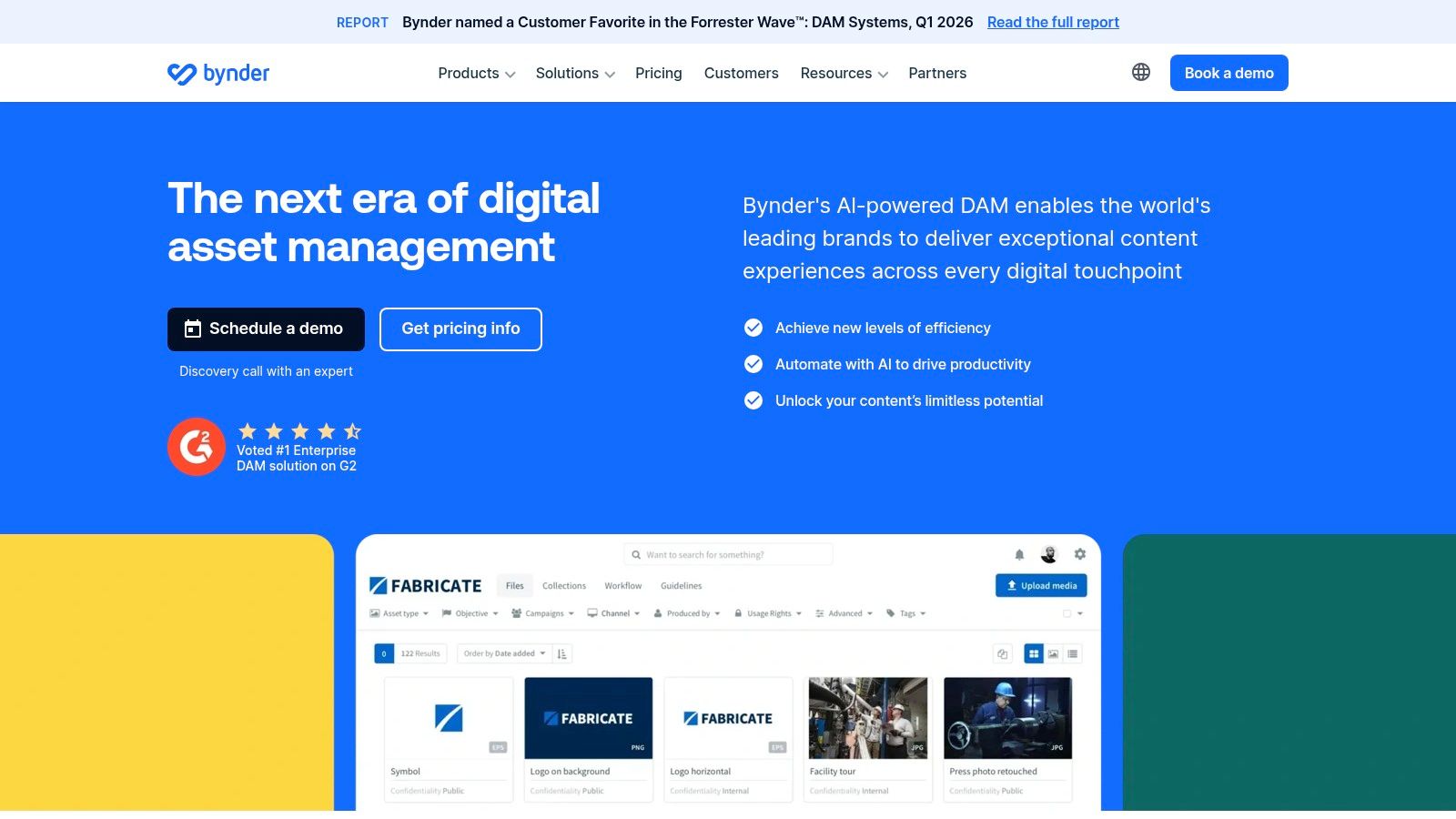
Bynder

One of Bynder's standout qualities is its approach to templating and asset creation. The Studio and print template features permit users to generate on-brand materials without needing a designer, which speeds up content production significantly. This, combined with its robust AI search capabilities for images, text, and even speech, makes it one of the best digital asset management software choices for teams that require both speed and brand control. The platform’s large integration marketplace also ensures it fits into existing tech stacks with minimal friction.

Key Details & Analysis

  • Ideal Use Case: Mid-size to large companies, particularly those in marketing, e-commerce, and branding, that need to manage the full content lifecycle and distribute assets externally through portals.
  • Pricing: Pricing is quote-based and modular. Costs vary depending on the specific modules selected, the number of users, and storage requirements.
  • Implementation: The platform is known for its user-friendly interface, which can simplify the onboarding process. However, a full implementation, especially with integrations, will require a dedicated project plan.
  • Mature ecosystem with a large marketplace of over 130 pre-built integrations.
  • Strong features for external sharing and distribution, including branded portals and CDN options.
  • Excellent templating tools for self-service, on-brand content creation.
  • Modular pricing means advanced features and key integrations can be add-ons that increase the total cost.
  • While powerful, the cost structure can be complex to navigate for smaller businesses.

Website: www.bynder.com

4. Brandfolder (by Smartsheet)

Brandfolder, now part of Smartsheet, is a digital asset management platform known for its intuitive user interface and powerful search capabilities. It serves as a single source of truth for marketing and creative assets, making it easier for teams to find, share, and manage brand content. The platform's core strength is its Brand Intelligence, an AI-powered engine that automatically tags, organizes, and analyzes assets, reducing manual effort and ensuring content is discoverable. Its integration with Smartsheet creates a connected work environment for planning, executing, and managing creative operations.
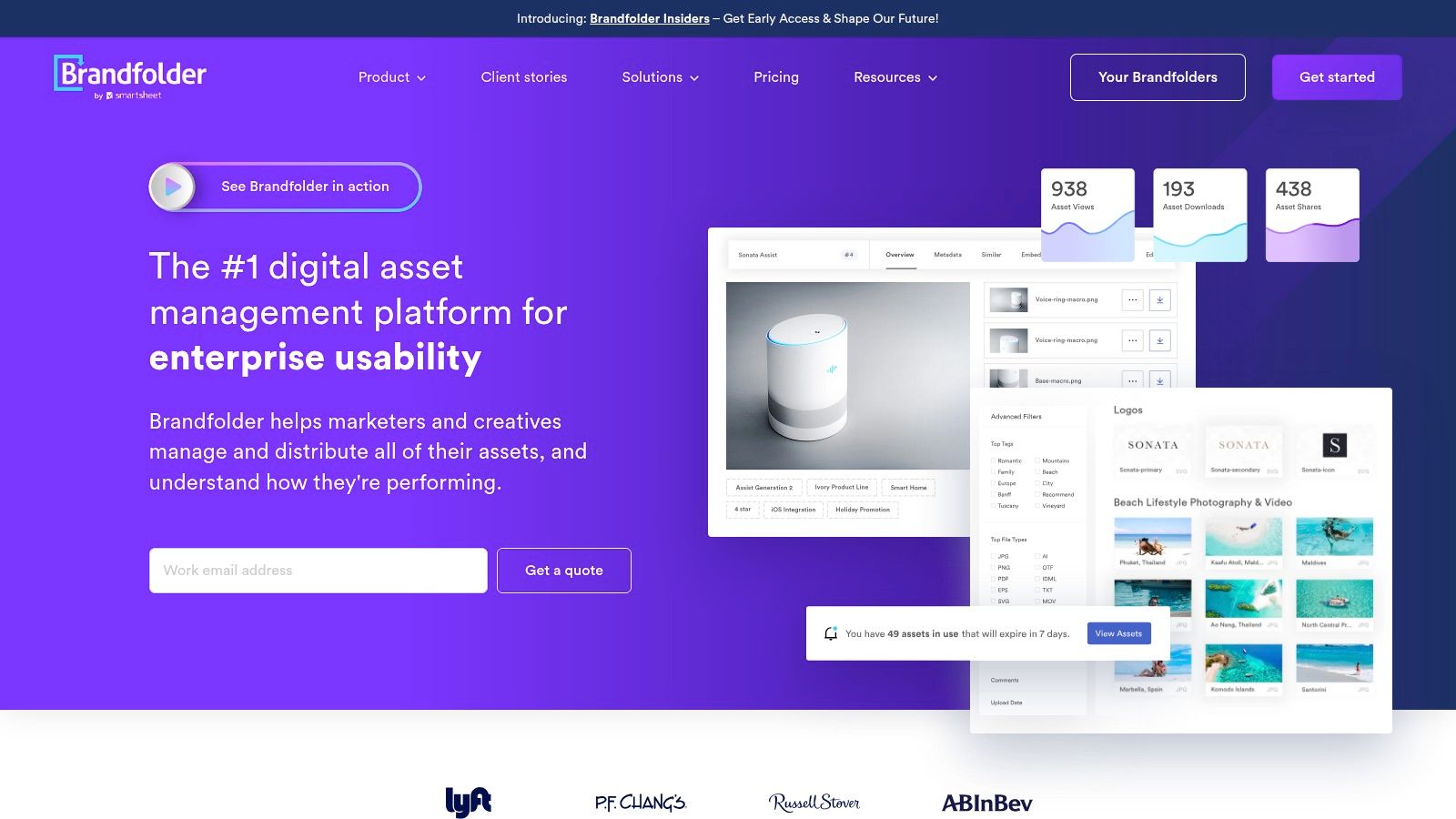
Brandfolder (by Smartsheet)

This platform is excellent for marketing teams that need more than just storage; it provides actionable insights into how assets are performing. Features like asset analytics, video AI, and OCR for documents help teams understand content usage and impact. This makes it one of the best digital asset management software choices for brands focused on data-driven content strategy. Many of these asset management principles also apply to product data, and you can see how they connect by reading about product catalog management software.

Key Details & Analysis

  • Ideal Use Case: Mid-market to enterprise companies, especially marketing and operations teams that already use or plan to use Smartsheet for project management and creative workflows.
  • Pricing: Custom quote-based. Pricing is not publicly listed and requires contacting their sales team for a demo and quote tailored to your organization's needs.
  • Implementation: The setup process is generally straightforward compared to more complex enterprise systems. Its user-friendly design helps with faster team adoption and reduces the need for extensive training.
  • Deep integration with Smartsheet provides end-to-end workflow and proofing capabilities.
  • Powerful AI and analytics (Brand Intelligence) offer valuable insights into asset usage.
  • Asset lifecycle controls, including availability dates and expiration, are very useful.
  • Pricing requires a sales inquiry, which can be a barrier for smaller teams.
  • Some advanced features are locked behind higher-tier, more expensive plans.

Website: brandfolder.com

5. Acquia DAM (formerly Widen)

Acquia DAM, which was once known as Widen, is a well-established digital asset management platform built for mid-to-large enterprises. It offers a powerful combination of asset organization, content distribution, and performance analytics. The platform's strength is its ability to serve as a single source of truth for an organization's entire content lifecycle, from creation and management to distribution through branded portals and performance tracking with its robust Insights tool.

Acquia DAM (formerly Widen)

This solution stands out by offering optional product information management (PIM) capabilities, making it a great choice for ecommerce and retail brands managing complex product catalogs alongside their marketing assets. Its AI-powered features, like auto-tagging and visual search, help teams find what they need quickly. With a focus on governance and a large library of pre-built integrations, Acquia DAM is considered one of the best digital asset management software options for companies needing control and scalability.

Key Details & Analysis

  • Ideal Use Case: Mid-market to enterprise companies, especially in retail and manufacturing, that need to manage both digital assets and product content within a single, governed system.
  • Pricing: Quote-based. While exact pricing is custom, Acquia provides a more transparent plan structure than some competitors, with defined limits for users, storage, and API calls.
  • Implementation: The setup is well-supported by Acquia's team. Its open API and over 80 existing integrations help simplify the process of connecting it to other business systems like CMS and marketing automation tools.
  • Strong analytics and reporting (Insights) to track asset usage and performance.
  • Transparent plan scaffolding with clear user, storage, and API limits.
  • Optional PIM functionality creates a combined asset and product content hub.
  • Enterprise add-ons and higher-tier plans can significantly increase the total cost.
  • Some of the most valuable features are locked behind more expensive plans.

Website: www.acquia.com

6. Cloudinary Assets (DAM)

Cloudinary Assets is a developer-focused DAM that combines powerful media management with an extensive set of APIs for on-the-fly image and video transformations. It is particularly effective for e-commerce and media-heavy applications that require automated content optimization and global delivery. Its core strength lies in its ability to manage a single source asset and generate countless variations programmatically, reducing storage costs and manual work for developers.
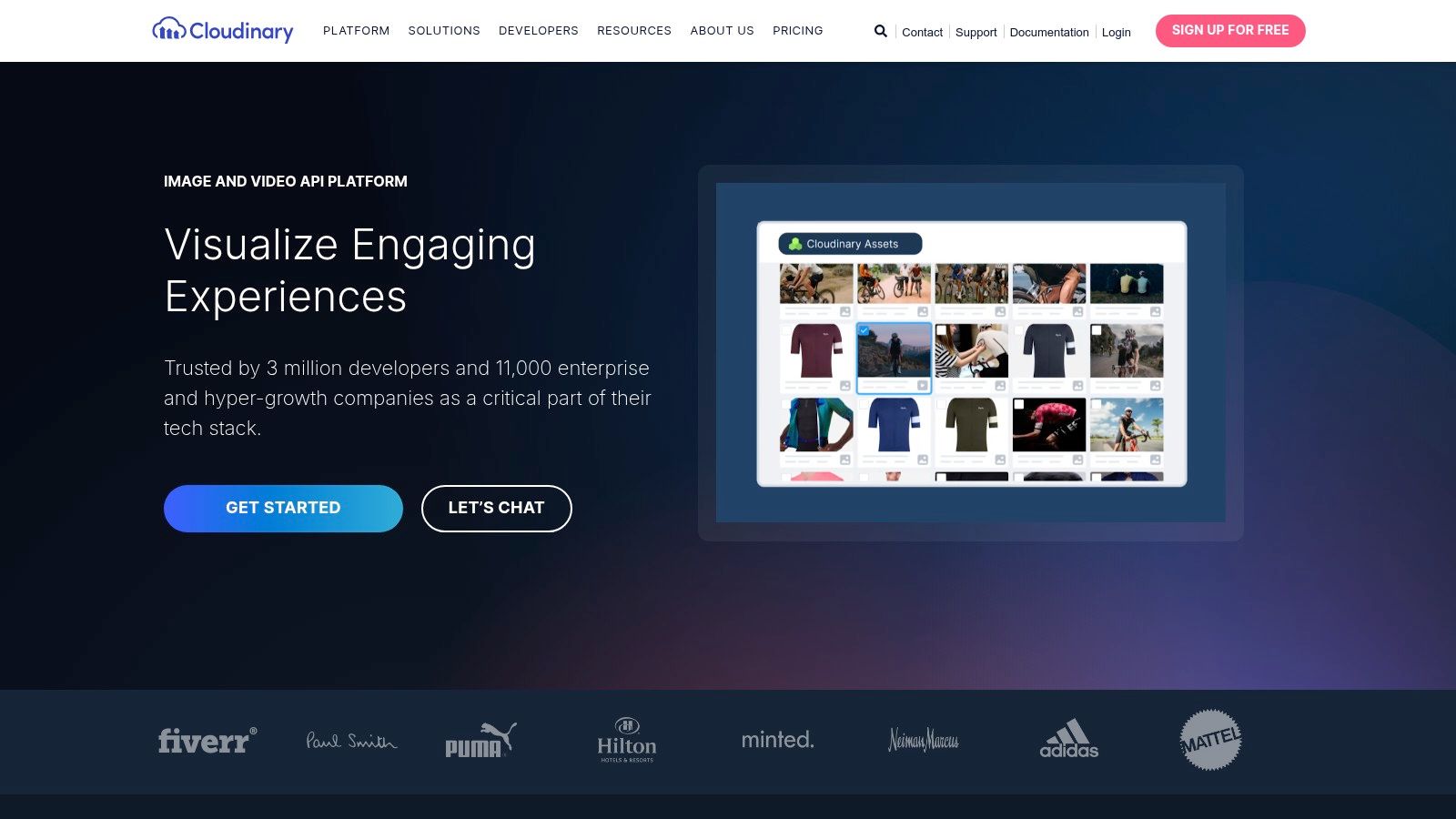
Cloudinary Assets (DAM)

The platform is designed to automate the entire media lifecycle. Its AI capabilities include auto-tagging and content-aware cropping, but its real power is in the media pipeline. Developers can use its SDKs and REST APIs to fetch, transform, and deliver optimized assets through a multi-CDN network. This makes it a strong choice for companies prioritizing performance and scalability, positioning it as one of the best digital asset management software options for tech-centric teams.

Key Details & Analysis

  • Ideal Use Case: E-commerce sites, web applications, and media-rich companies that need high-performance, automated media transformations and delivery. It is built for developer-led workflows.
  • Pricing: Public pricing tiers are available, including a generous free plan that is great for testing and small projects. Paid plans scale based on credits, which cover transformations, storage, and bandwidth.
  • Implementation: Setup is straightforward for developers who can integrate using the provided SDKs and APIs. The platform is API-first, so teams comfortable with code will find it easy to get started.
  • Excellent for on-the-fly media transformations and optimization.
  • Strong developer tools, SDKs, and extensive documentation.
  • Transparent pricing with a free tier makes it accessible for trial and small-scale use.
  • The user interface for brand management and governance is less robust than dedicated enterprise DAMs.
  • Marketing teams may find the developer-centric approach less intuitive than other platforms.

Website: cloudinary.com

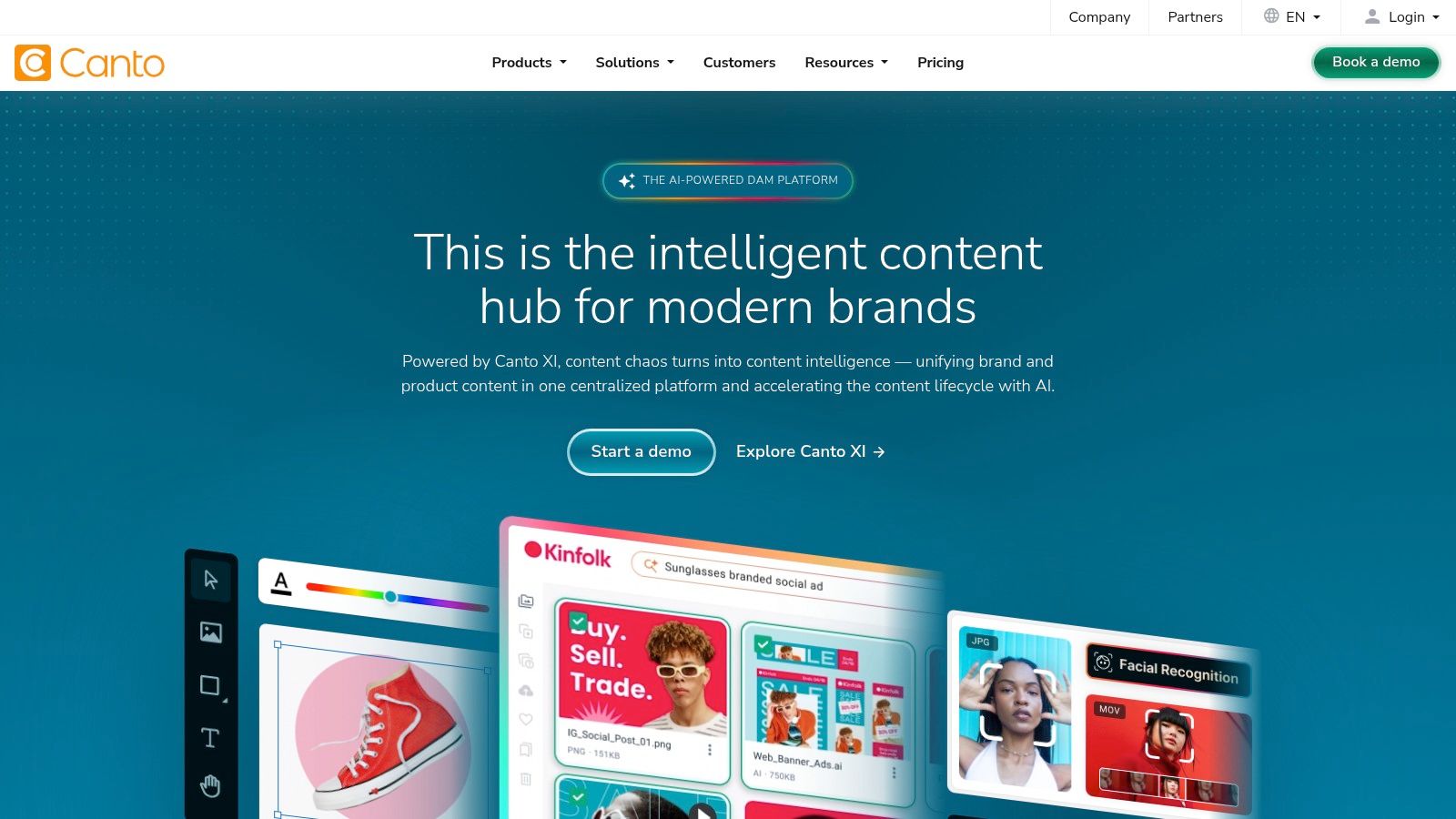
7. Canto

Canto is a highly intuitive digital asset management platform praised for its user-friendly interface, making it a strong choice for teams without dedicated technical staff. It focuses on simplifying how organizations centralize, organize, and share their brand assets. The system is designed for quick adoption, allowing marketing, creative, and sales teams to easily find what they need and maintain brand consistency across all channels.
Canto

A key feature is its AI-powered search and automatic tagging, which helps categorize large volumes of content without extensive manual effort. Canto also provides branded portals and share links, giving teams secure ways to distribute assets to internal departments, external partners, or the public. Its reputation as one of the best digital asset management software options is solidified by its strong customer success and onboarding services, ensuring teams get maximum value from the platform right from the start.

Key Details & Analysis

  • Ideal Use Case: Mid-market to enterprise companies looking for a powerful yet easy-to-use DAM that non-technical users can adopt quickly. It's great for teams that need to improve brand consistency and content sharing.
  • Pricing: Canto uses custom quote-based pricing and does not list plans publicly. You must contact their sales team for a demonstration and quote tailored to your organization's needs.
  • Implementation: The platform is known for its straightforward setup and strong customer support during the onboarding process. Many users find they can get up and running faster compared to more complex enterprise systems.
  • Excellent ease of use and a clean interface promote high user adoption.
  • Strong focus on customer success, with dedicated training and support.
  • Good integrations with tools like Adobe Creative Cloud, Canva, and major CMS platforms.
  • Pricing is not transparent and requires a sales consultation.
  • Some advanced enterprise features may only be available on higher-priced, custom plans.

Website: https://www.canto.com

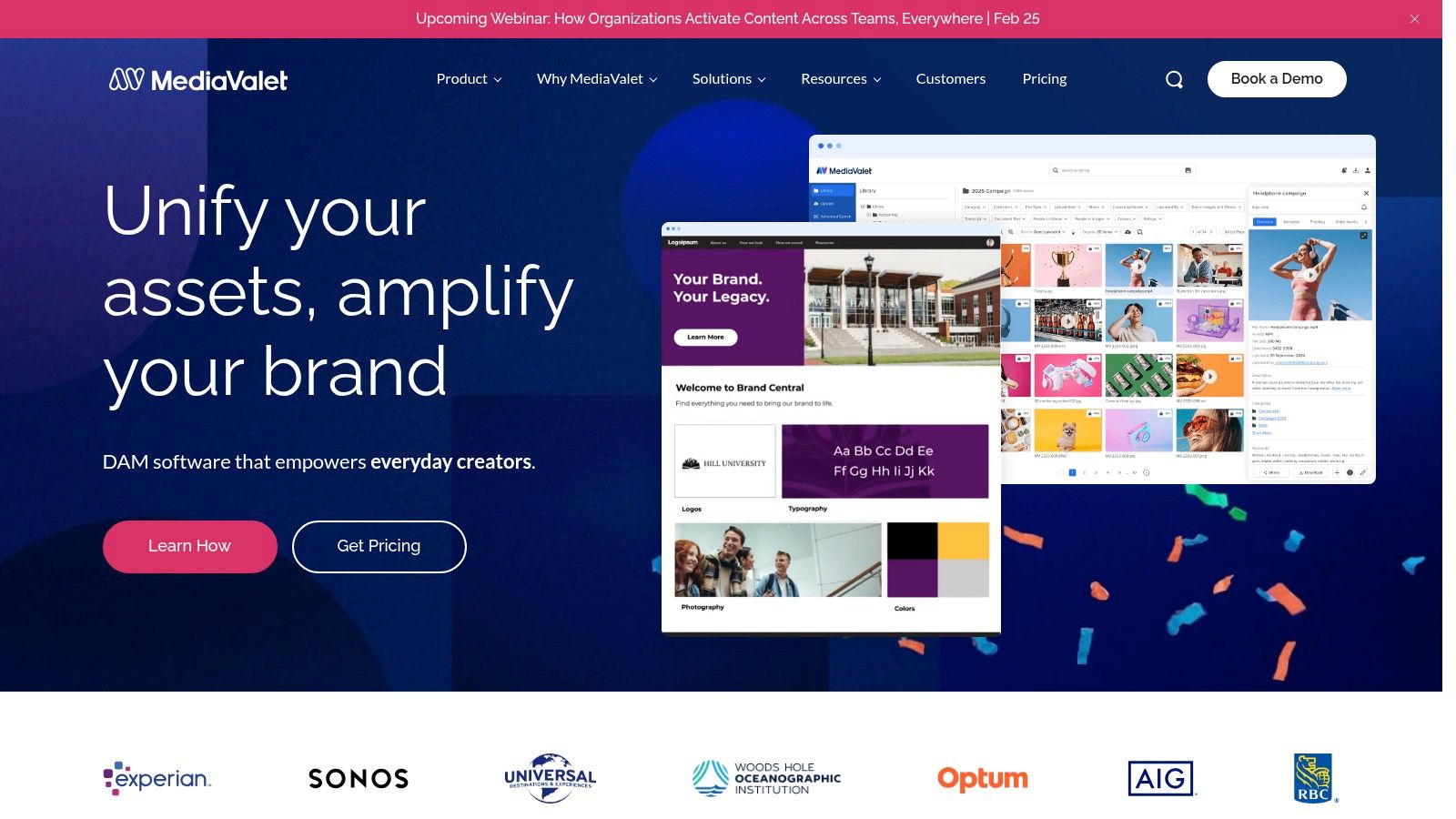
8. MediaValet

MediaValet is a highly scalable, enterprise-class digital asset management solution built entirely on Microsoft Azure. It stands out by emphasizing security, compliance, and unlimited user access, making it a strong choice for large, distributed teams in regulated industries. Its architecture provides global redundancy and performance, ensuring assets are both secure and quickly accessible from anywhere.
MediaValet

A key differentiator for MediaValet is its commitment to customer success and a simplified user experience. The platform offers unlimited users, training, and support, which removes a common barrier to adoption seen with other DAMs. This focus on accessibility, combined with powerful AI-driven features like video and audio intelligence, makes it one of the best digital asset management software options for organizations prioritizing both powerful technology and widespread team adoption.

Key Details & Analysis

  • Ideal Use Case: Mid-to-large sized organizations, particularly those in healthcare, finance, or higher education, that require top-tier security (SOC 2, HIPAA readiness), unlimited user seats, and global asset distribution.
  • Pricing: Pricing is custom and based on storage tiers and optional add-ons like CreativeSPACES or their API access. Public price points are not itemized, requiring a direct quote.
  • Implementation: The process is known for being predictable and well-supported. Every customer gets a dedicated customer success manager to guide them through onboarding, data migration, and training.
  • Strong security and compliance posture built on the Microsoft Azure cloud.
  • Unlimited users, support, and training are included in all plans.
  • Predictable and well-structured onboarding process with dedicated support.
  • Pricing isn't transparent and varies based on storage and required add-ons.
  • Advanced enterprise integrations and features might necessitate higher-tiered, custom plans.

Website: www.mediavalet.com

9. Aprimo

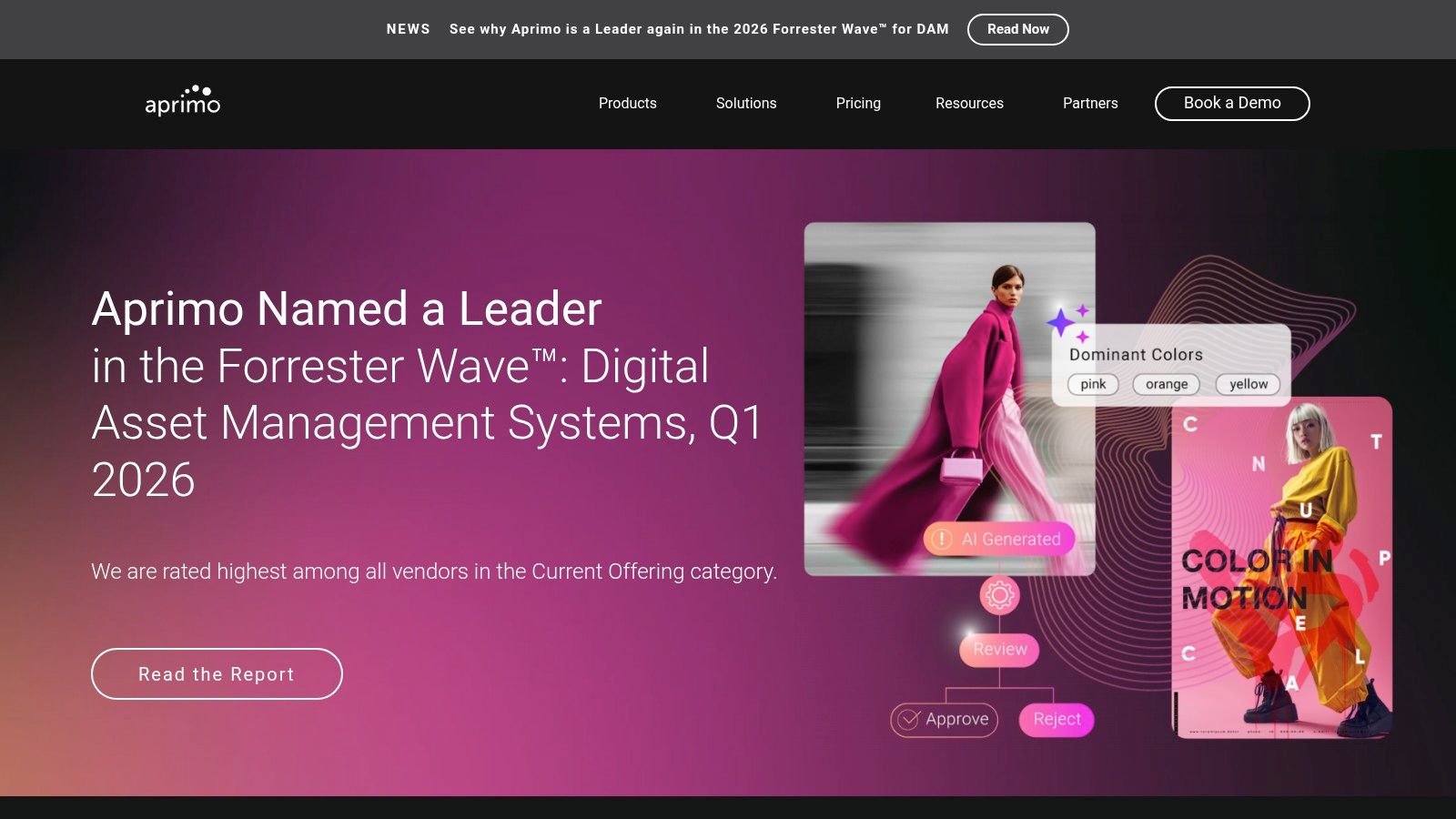
Aprimo offers a powerful solution that combines digital asset management with content operations and marketing resource management. It is designed for large organizations aiming to orchestrate their entire content supply chain, from initial planning and production to final delivery and analysis. The platform’s strength lies in its ability to unify disparate marketing processes into a single, cohesive workflow, making it a contender for the best digital asset management software for enterprises focused on operational efficiency.
Aprimo

Aprimo excels at metadata automation, using AI to apply smart tags, perform optical character recognition (OCR), and even generate summaries from video and audio files. This automated intelligence helps teams find assets faster and reduces manual data entry. The system also features configurable workflows, annotations, and templating for review and approval cycles, ensuring brand consistency and compliance across all marketing materials.

Key Details & Analysis

  • Ideal Use Case: Global enterprises that need to manage the complete content lifecycle, including strategic planning, budgeting, creation, and distribution, all within one system.
  • Pricing: Pricing is custom and quote-based. It is typically structured around the number of users and selected modules, requiring a minimum 12-month contract.
  • Implementation: Setup can be involved due to the platform's broad capabilities. The modular nature means contracts can become complex, and the total cost of ownership should be evaluated carefully to account for all needed features.
  • A broad suite that unifies planning, production, and delivery.
  • Strong industry recognition from analysts like Gartner and IDC.
  • Extensive marketplace with integrations for CMS, e-commerce, and more.
  • High cost and contract complexity can be a barrier for smaller companies.
  • Its extensive features may require significant user training to fully adopt.

Website: https://www.aprimo.com

10. Amplience Content Hub (DAM)

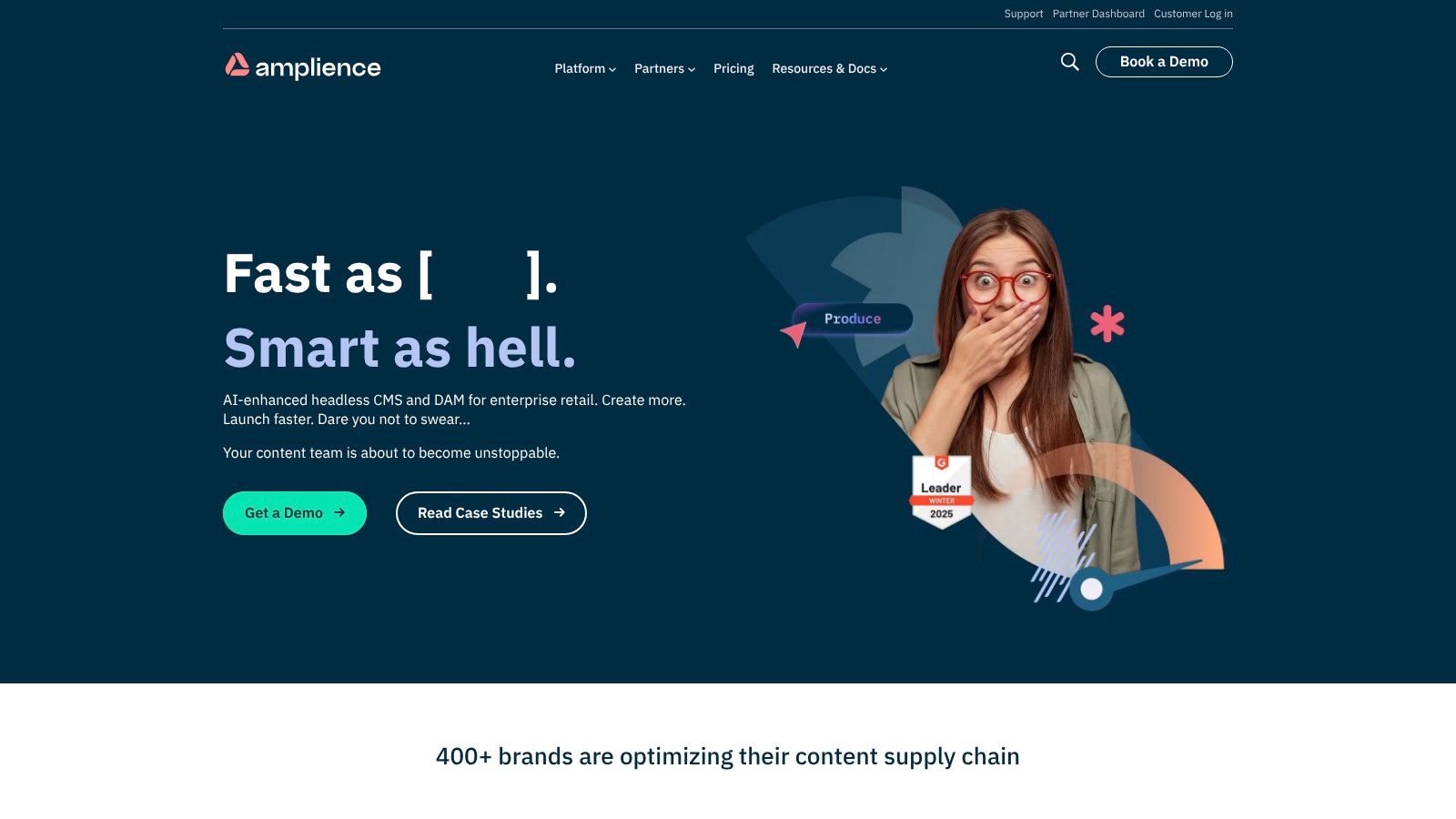
Amplience Content Hub is an API-first, headless digital asset management system built specifically for the demands of high-volume e-commerce and retail. It operates as a central repository for all product media, designed to serve assets across any channel, from websites and mobile apps to in-store displays and social marketplaces. Its core strength is its Dynamic Media engine, which automates the creation of countless asset variations on the fly, ensuring perfect optimization for every customer touchpoint.
Amplience Content Hub (DAM)

The platform's headless architecture is a key differentiator, providing developers with the flexibility to integrate content into any front-end experience. AI features like object detection, background removal, and auto-tagging help automate tedious manual work, accelerating content-to-market timelines. This focus on speed and automation makes it a strong candidate for the best digital asset management software for commerce-focused businesses looking to scale their omnichannel presence.

Key Details & Analysis

  • Ideal Use Case: Retail and e-commerce brands that require rapid, automated asset delivery across a multitude of channels. It's especially suited for teams managing large product catalogs and frequent campaign launches.
  • Pricing: Offers a Developer Trial, a Starter edition, and custom Enterprise plans. Pricing is visit-based for content delivery, offering a predictable cost model without API call limits, which is attractive for high-traffic businesses.
  • Implementation: As an API-first platform, implementation requires developer resources. While it can be used as a standalone DAM, it integrates deeply with the Amplience CMS, and setup is often part of a broader MACH-based architecture project.
  • Excellent for commerce velocity with powerful on-the-fly media transformations.
  • Predictable, visit-based pricing is a major plus for scaling brands.
  • Strong developer tools and a true headless architecture offer great flexibility.
  • Its full potential is best realized when paired with the Amplience CMS.
  • May be overly complex for organizations that only need a simple, standalone asset library.

Website: amplience.com

11. Frontify

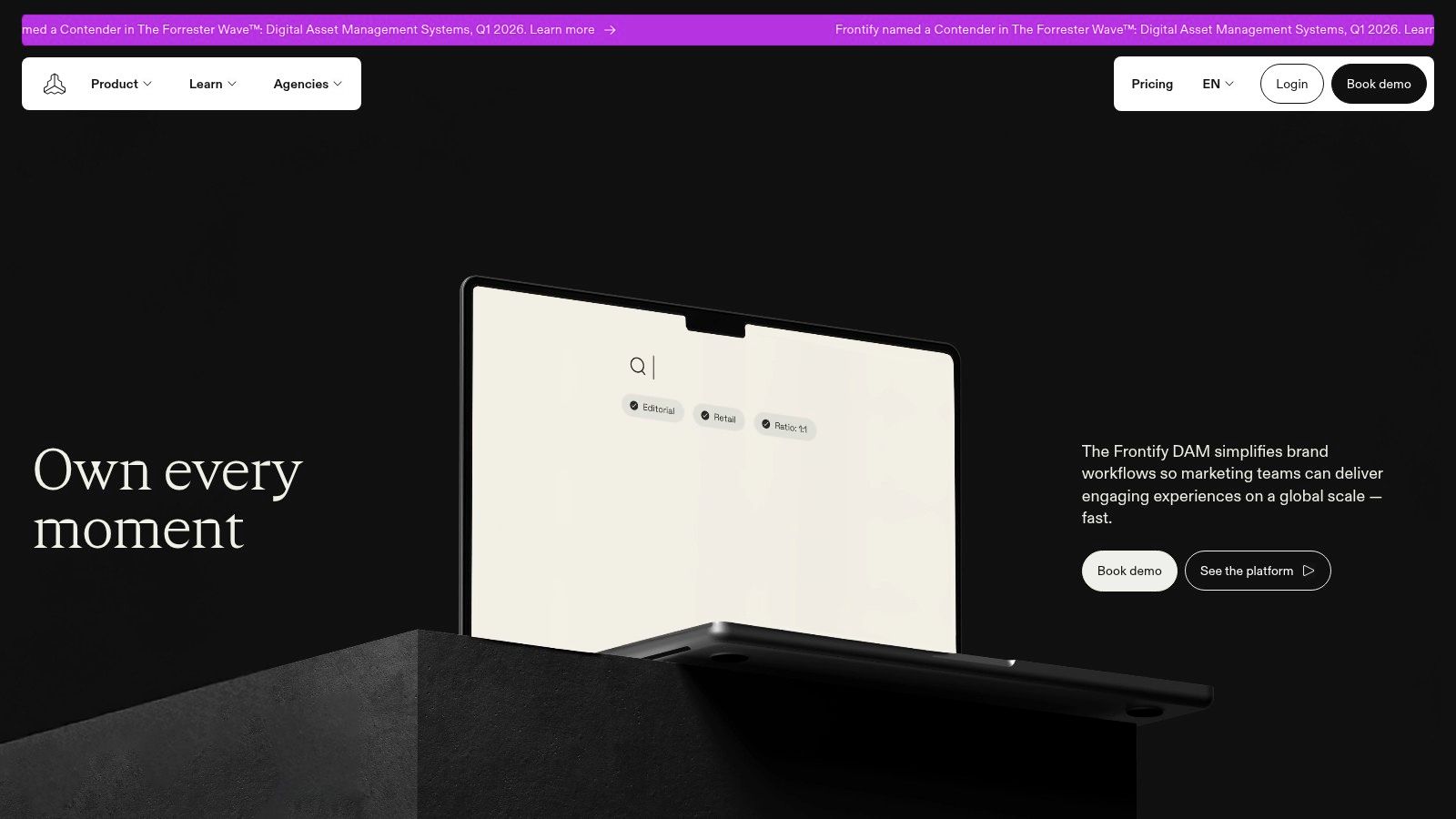
Frontify positions itself as a brand management platform where a powerful Digital Asset Management system serves as the core component. It goes beyond simple file storage by integrating brand guidelines, collaboration tools, and design templates directly with the assets. This creates a single source of truth for marketing and creative teams, ensuring that every asset used is on-brand and approved. The platform's unique licensing model is a major differentiator in the market.
Frontify

Instead of per-seat pricing, Frontify uses a monthly active user (MAU) model. This structure is designed to encourage broad adoption across an organization and with external partners, without the cost penalty of adding every casual user. Its governance-focused AI, customizable metadata, and centralized brand portals make it a strong contender for the best digital asset management software for companies focused on brand consistency at scale.

Key Details & Analysis

  • Ideal Use Case: Multi-brand organizations or companies that need to provide widespread, controlled access to brand assets and guidelines for both internal teams and external partners.
  • Pricing: Custom quote-based. Pricing depends on your forecasted monthly active users and the specific feature modules you need.
  • Implementation: The platform is user-friendly, but fully setting up brand guidelines and complex workflows requires a dedicated project. Organizations must plan their MAU usage carefully to optimize costs and avoid unexpected fees.
  • MAU pricing encourages wide adoption without rigid seat limits.
  • Excellent for managing brand consistency across multiple brands or teams.
  • Integrates brand guidelines directly with the asset library.
  • Forecasting monthly active users can be challenging for some businesses.
  • Can be more expensive than simpler DAMs if you don't need the full brand management suite.

Website: https://www.frontify.com

12. OpenText Media Management (OpenText DAM)

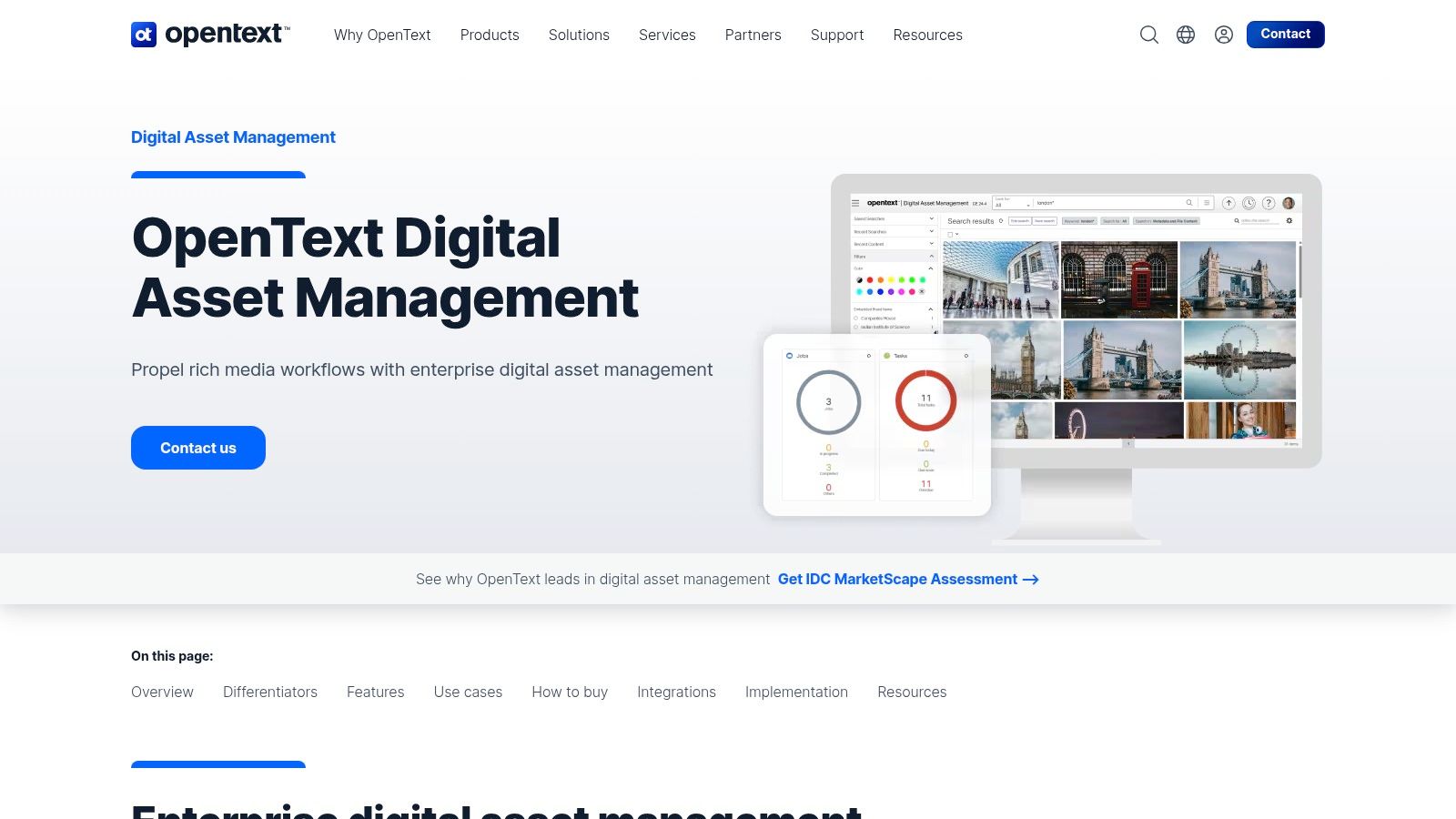
OpenText Media Management is an enterprise-grade DAM built for performance and massive scale, capable of managing over a billion assets. It is designed for complex, global enterprises and regulated industries that require tight control over vast media libraries. The platform focuses on deep integrations across marketing, PIM, creative, and commerce ecosystems, making it a central content engine for large-scale operations.
OpenText Media Management (OpenText DAM)

Its AI-powered media tagging and automated discovery are essential for organizations handling huge volumes of content. OpenText provides end-to-end asset governance, including review, markup, and approval workflows to maintain brand consistency and compliance. These features, combined with its proven ability to perform in high-stakes environments, make it a solid choice for businesses seeking the best digital asset management software for their complex needs.

Key Details & Analysis

  • Ideal Use Case: Large, global corporations or organizations in regulated sectors like finance or pharmaceuticals that need a robust, secure, and scalable system for managing a high volume of digital assets.
  • Pricing: Pricing is custom and quote-based. You will need to engage with the OpenText sales team to scope your specific requirements, as costs are aligned with enterprise-level solutions.
  • Implementation: The setup is complex and typically requires a dedicated project team or specialized partners. The total cost of ownership, including implementation and ongoing management, is a significant factor to consider.
  • Proven scalability and enterprise-level security for high-volume media environments.
  • Extensive integration portfolio that connects with Adobe CC, Microsoft, Google, and rights management tools.
  • Strong governance and workflow automation for regulated industries.
  • High complexity and cost make it unsuitable for small to medium-sized businesses.
  • Requires a significant investment in both financial resources and technical expertise to implement and maintain.

Website: opentext.com

Top 12 DAM Software Comparison

ProductCore focus / Key featuresTarget audienceUX & GovernancePricing & ValueUnique selling points
NanoPIMAI‑first PIM + DAM; multi‑LLM GEO copy, Smart Prototypes, Data Holding BayRetailers, manufacturers, marketplaces, agenciesHuman‑in‑loop review, prototypes, cascading attributes, versioning & audit trailsToken‑based usage billing (example $10/1k tokens); starter tiers ~$49/$159‑mo; scales with usageGEO optimization, channel‑specific copy, safe import/merge workflow — Recommended
Adobe Experience Manager (AEM) AssetsEnterprise DAM; smart tags, Dynamic Media, Creative Cloud integrationLarge enterprises using Adobe Creative/Experience CloudRobust permissions, governance, strong developer extensibilityCustom enterprise pricing; high TCO for mid‑marketDeep Creative Cloud/Experience Cloud integration; dynamic omnichannel delivery
BynderModern DAM: AI search, workflows, templating, large integrations marketplaceBrand, creative & e‑commerce teamsBriefing, proofing, approvals; connected content opsQuote‑based; modular add‑ons can increase costSelf‑serve templates, broad prebuilt integrations
Brandfolder (Smartsheet)User‑friendly DAM; smart tagging (Brand Intelligence), Smartsheet panelMarketing & ops teams, Smartsheet usersSmooth collaboration, proofing, asset analyticsDemo/quote; advanced features on higher tiersSmart tagging + Smartsheet proofing/analytics integration
Acquia DAM (formerly Widen)DAM with AI enrichment, portals, optional PIM capabilitiesEnterprises needing governance, portals & analyticsGoverned workflows, multilingual support, clear plan scaffoldingQuote‑based with clearer plan/user/storage baselinesTransparent plan structure; strong analytics & distribution
Cloudinary Assets (DAM)Developer‑first DAM + media pipeline; on‑the‑fly transformationsDev teams, e‑commerce platforms, apps needing renditionsExtensive SDKs/APIs; one‑file variant model for storage efficiencyPublic pricing with generous free tier; predictable scalingHigh performance multi‑CDN delivery; adaptive video & transformations
CantoIntuitive DAM focused on organization, portals, AI searchNon‑technical marketing teams, small‑mid orgsEasy onboarding, portals, SSO and security controlsQuote‑basedStrong customer success; expanded PIM/DAM options via acquisition
MediaValetAzure‑based DAM emphasizing security, portals, unlimited usersGlobal marketing teams needing compliance & supportUnlimited users, SSO, portals, 24/7 support, forensic watermarkingStorage/add‑on pricing; quote requiredAzure hosting, SOC2/HIPAA readiness, enterprise support
AprimoDAM + content operations & MRM; metadata automationLarge orgs needing planning, production & governanceConfigurable workflows, approvals, annotationsCustom pricing; modules & 12‑month minimumsEnd‑to‑end content supply chain; analyst‑recognized solution
Amplience Content Hub (DAM)API‑first headless DAM for commerce; Dynamic Media deliveryCommerce & retail dev teams, omnichannel sitesHeadless APIs, multi‑CDN, 99.99% SLAVisit‑based pricing for delivery; predictable cost modelCommerce‑focused velocity; unlimited API editions for developers
FrontifyBrand management hub with integrated DAM, guidelines & templatesMulti‑brand organizations, brand teamsGovernance tools, central brand portals, MAU licensingCustom MAU‑based pricing (manage active users)MAU model encourages broad adoption; central brand governance
OpenText Media ManagementEnterprise‑grade DAM for scale (1B+ assets), AI taggingComplex global enterprises, regulated industriesEnterprise governance, role‑based access, deep integrationsQuote‑based enterprise contracts; TCO varies with scopeProven scale & security for massive libraries; broad ecosystem integrations

Final Thoughts

We have navigated the complex world of Digital Asset Management, exploring twelve of the market's leading platforms. From the all-in-one power of Adobe Experience Manager Assets to the user-friendly design of Bynder and Canto, it is clear there is no single "best digital asset management software" for everyone. The right choice is deeply personal to your organization's unique structure, workflow, and future goals.

Your decision hinges on moving beyond feature lists and focusing on real-world application. For a large enterprise like a multinational manufacturer, the robust security, scalability, and complex workflow automation of a solution like OpenText Media Management or Aprimo might be non-negotiable. In contrast, a fast-growing eCommerce brand or a digital agency juggling multiple clients might prioritize the agile, API-first nature of Cloudinary or the brand consistency tools offered by Frontify.

Key Takeaways and Your Next Steps

Before you sign any contracts, revisit your core needs. The detailed buyer's checklist provided earlier is your best friend in this process. Use it to build a concrete requirements document.

Here are the most important factors to guide your selection:

  • Scalability is Paramount: Your asset library will only grow. Choose a system that can grow with you without requiring a painful migration in two years. Consider not just storage but also user capacity and feature expansion.
  • Integration is Everything: A DAM cannot live in a silo. Map out your existing tech stack, especially your PIM, CMS, and eCommerce platforms. Ensure your chosen DAM has pre-built connectors or a flexible API to create a smooth, automated content lifecycle.
  • Focus on User Adoption: The most powerful tool is useless if your team will not use it. During demos, pay close attention to the user interface. Is the search function intuitive? Can a non-technical user easily upload, tag, and find assets? Involve your creative, marketing, and product teams in the evaluation process.
  • AI and Automation are Game-Changers: Modern DAMs use AI for more than just auto-tagging. Look for features that automate content resizing for different channels, identify duplicates, or even suggest assets for specific campaigns. For those particularly interested in how AI is transforming visual asset creation and management within the fashion industry, our complete guide on the 12 Best AI Tools For Fashion Brands In 2025 offers deeper insights.

Making the Final Choice

Armed with this information, your path forward should be much clearer. Shortlist three to four vendors that align with your budget and primary use case. Schedule personalized demos and come prepared with specific questions and scenarios relevant to your daily operations. Ask them to show you, not just tell you, how their platform solves your specific pain points.

Choosing the best digital asset management software is a significant investment, but it's one that pays dividends in efficiency, brand consistency, and speed to market. By centralizing your valuable brand and product assets, you are not just organizing files; you are building a foundation for scalable, high-impact marketing and commerce operations for years to come.


Are you an eCommerce manager or manufacturer struggling to manage both product information and digital assets? NanoPIM offers a unified PIM and DAM solution designed for growing brands, eliminating data silos and simplifying your content workflow. Explore NanoPIM to see how an integrated approach can accelerate your go-to-market strategy.